
Prune Calories: Nutrition Facts and Tracking Guide
Learn the exact calories, macros, and fiber in prunes. Discover practical tips to portion, enjoy, and accurately track dried plums in your daily diet.
· 4 min read
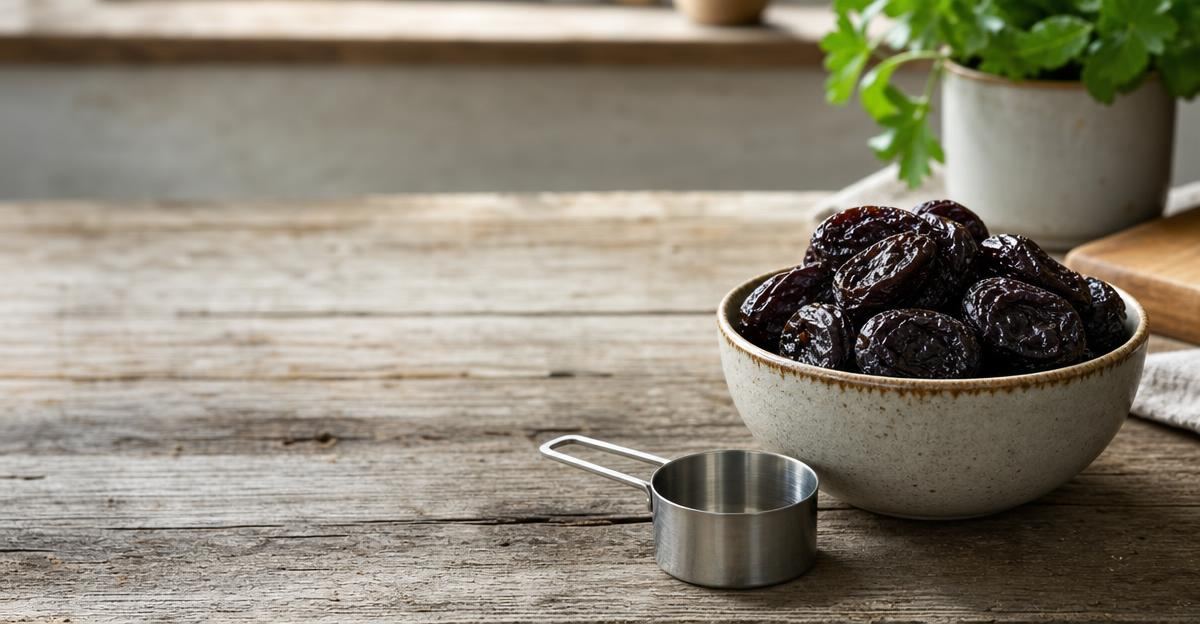
Dried fruit often earns an unfair reputation as an all-or-nothing food. Some people avoid dried plums entirely because of their concentrated sugar content, while others treat them as an unlimited natural health snack. The reality sits comfortably in the middle. Prunes offer genuine digestive and metabolic benefits, but their energy density means portion awareness makes a major difference when you are managing your daily energy balance.
Understanding prune calories, macronutrients, and simple ways to log them helps you enjoy their nutritional value without accidentally overshooting your targets.
Prune Calories and Macronutrient Breakdown
Because the water content is removed during the drying process, prunes are significantly more calorie-dense than fresh plums. A single pitted prune weighs about 9.5 grams and contains roughly 23 calories.
According to the USDA FoodData Central database, a standard serving of about five pitted prunes (roughly 48 grams) delivers:
- Calories: ~115 kcal
- Carbohydrates: ~30 g
- Dietary Fiber: ~3.4 g
- Sugars: ~18 g (naturally occurring)
- Protein: ~1 g
- Fat: ~0.2 g
- Potassium: ~350 mg
A larger 100-gram serving—roughly 10 to 11 prunes—contains approximately 240 calories and 7 grams of dietary fiber.
Most of the energy in prunes comes from carbohydrates, specifically glucose, fructose, and sorbitol. Sorbitol is a slowly metabolized sugar alcohol naturally present in stone fruits. Because your body does not fully absorb sorbitol in the small intestine, it draws water into the colon, which explains why prunes are well-known for supporting digestive regularity.
Why Prunes Fit Well in a Balanced Diet
Despite their natural sugar content, prunes have a relatively low glycemic index. The combination of soluble and insoluble fiber slows the rate at which sugars enter the bloodstream, preventing rapid spikes in glucose and insulin.
Prunes also provide essential micronutrients:
- Vitamin K: Essential for blood clotting and bone metabolism.
- Potassium: Supports healthy blood pressure and fluid balance.
- Boron and Polyphenols: Plant compounds that research suggests support bone mineral density, particularly in older adults.
For anyone who is also tracking fiber intake without overcomplicating meals, adding a small serving of prunes is one of the quickest ways to add three to four grams of fiber without preparing raw vegetables or blending complex smoothies.
Prunes vs. Prune Juice: Key Differences
When logging your intake, it is critical not to confuse whole dried prunes with prune juice.
A single cup (8 fluid ounces) of prune juice contains about 180 calories and roughly 42 grams of carbohydrates, but only 2.5 grams of fiber. The juicing process removes much of the beneficial insoluble pulp while concentrating the liquid sugars.
Drinking juice also bypasses the physical chewing process and empties quickly from the stomach, which can leave you feeling less full compared to eating whole fruit. If your goal is satiety, digestive health, and calorie control, whole dried prunes are almost always the better choice. If an older family member requires specialized hydration or texture modifications, professional home care resources can offer practical guidance on meal preparation and fluid management.
Practical Tips for Tracking Prunes Accurately
Because dried fruit is small, portion creep happens easily. Grabbing an uncounted handful from a bulk bag while standing in the kitchen can quietly add 150 to 200 untracked calories to your day. Here are three simple habits to keep your tracking accurate:
1. Count by Piece or Weigh in Grams
Because individual prunes vary in size, weighing your portion on a kitchen scale in grams is the most accurate approach. If you are on the go, simply counting individual pieces (for example, logging four distinct prunes rather than an estimated "quarter-cup") gives you a close estimate.
2. Pair Them with Protein or Healthy Fats
Eating dried fruit on its own can sometimes leave you hungry an hour later. Pairing two or three prunes with a source of protein or healthy fat—such as plain Greek yogurt, cottage cheese, or a dozen raw almonds—slows gastric emptying and keeps you satisfied much longer.
3. Account for Stewed or Canned Varieties
If you buy jarred or canned prunes, check the label carefully. Many canned varieties are packed in heavy syrup, which sharply increases the total calories and refined sugar content. Choose varieties packed in water or unsweetened fruit juice, or simmer plain dried prunes in hot water at home with a cinnamon stick.
A Balanced View on Dried Fruit
Prunes are nutrient-dense whole foods that provide practical benefits for digestion, bone health, and everyday energy. You do not need to avoid them because of their sugar content, nor do you need to eat them in large quantities to reap their benefits. A modest daily portion of three to five prunes fits easily into almost any nutritional target when accounted for honestly.
If you are managing blood sugar conditions or specific digestive sensitivities, remember that this information is educational; speak with a registered dietitian or personal physician for individualized medical advice.
To build consistent daily habits, log your meals, workouts, and weight in one place with Stride.
Put this into practice with Stride
Log meals, training, weight and sleep in seconds, then get guidance that fits your own numbers.
Try Stride free