
Produce With or Without Skin: What Changes?
Learn how keeping or removing the skin on fruits and vegetables changes their fiber, vitamins, and minerals, with simple tips for daily cooking.
· 4 min read
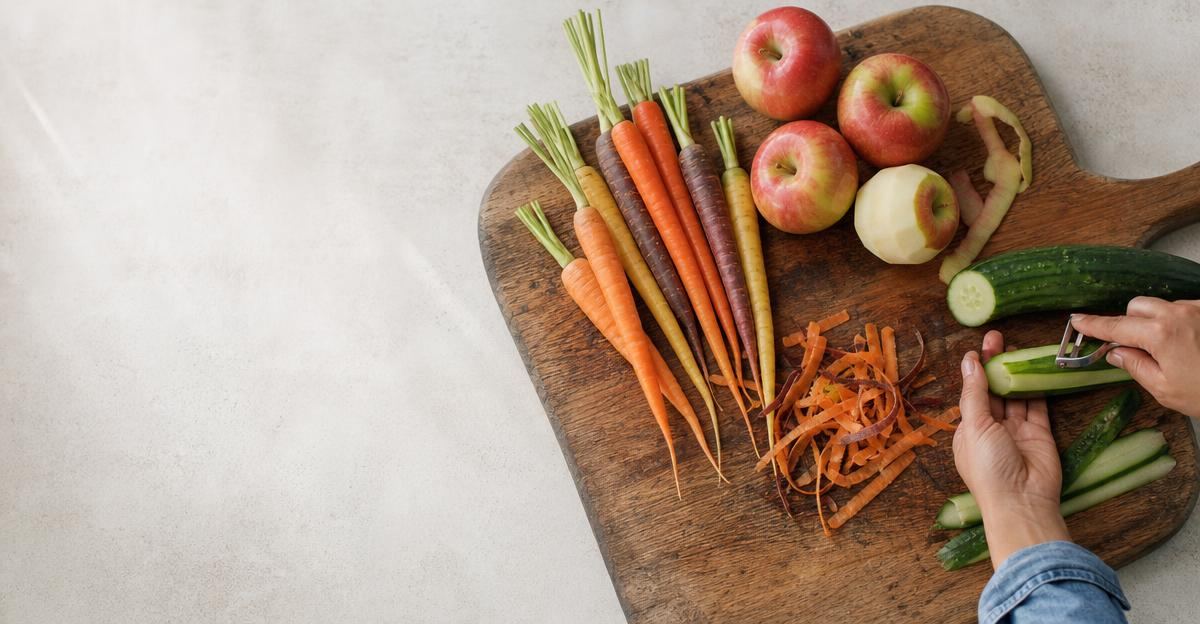
When you stand over the sink with a peeler in hand, you are making a daily decision that subtly alters the fiber, micronutrients, and cooking properties of your food. Potatoes, apples, carrots, cucumbers, and pears are routine staples, yet many of us peel them out of habit rather than intention.
Understanding what sits inside plant skins versus the underlying flesh helps you get the most out of your produce without turning preparation into an all-or-nothing chore. Here is a clear look at how peeling affects vitamins, minerals, and dietary fiber, along with practical tips for everyday cooking and tracking.
What Lives in the Peel?
The outer skin of a plant serves as its primary defense against pests, ultraviolet light, and environmental stress. Because of this protective role, plants concentrate specific compounds directly on or just beneath their exterior layer.
When you leave the peel intact, you generally retain three main nutritional components:
- Insoluble fiber: While the soft inner flesh often provides soluble fiber, the tougher peel consists largely of insoluble fiber, such as cellulose, which adds bulk to digestion.
- Polyphenols and pigments: The vibrant colors of fruits and vegetables—deep reds, purples, and dark greens—signal the presence of anthocyanins, carotenoids, and other protective phytonutrients concentrated in the skin.
- Vitamins and minerals: Water-soluble vitamins, such as vitamin C and certain B vitamins, along with minerals like potassium and magnesium, tend to reside in higher concentrations in the peel and the immediate layer just beneath it.
According to research indexed by the USDA FoodData Central database, an unpeeled medium apple contains noticeably higher amounts of fiber, vitamin C, and potassium than an apple with its skin removed. Similarly, a baked potato with skin preserves significant potassium and dietary iron compared to peeled flesh alone.
The Trade-Offs of Peeling
While leaving the peel on boosts total nutrient density, peeling is not inherently wasteful or harmful. Different culinary goals, digestive needs, and produce types warrant different approaches.
When to Keep the Skin
For everyday produce with edible, tender skins—such as apples, pears, carrots, zucchini, cucumbers, and thin-skinned potatoes—keeping the peel on is an easy way to increase daily nutrient density. A quick rinse and gentle scrub under cool running water remove surface soil while keeping the outer layer intact.
Keeping the skin on also saves valuable preparation time. If you find yourself asking should you track non-starchy vegetables and whole produce with high precision, remember that small shifts in fiber from peels support overall satiety without drastically changing your daily calorie totals.
When Peeling Makes Sense
There are clear scenarios where removing the peel is the better choice:
- Texture and digestion: Inedible or woody skins (such as on winter squash, pineapples, or older root vegetables) can be harsh on the palate and tough on sensitive digestive tracts.
- Specific culinary results: Smooth purees, silky mashed potatoes, and certain baking recipes require a uniform texture that skins disrupt.
- Produce age and blemishes: Bruised, green-tinged, or damaged peels should be trimmed away for safety and flavor.
Families supporting older adults with chewing difficulties or sensitive digestion often find that peeled, gently cooked produce ensures consistent nutrient intake without discomfort. For those managing broader household wellness routines, resources like How To Get Excellent Value Without Sacrificing Quality highlight how simple, practical adjustments make daily care easier.
A Quick Guide to Common Produce
To take the guesswork out of meal prep, here is how common fruits and vegetables compare when prepared with or without their skins:
| Produce Item | Skin Recommendation | What You Keep With the Skin |
|---|---|---|
| Apples & Pears | Keep on | Quercetin, insoluble fiber, vitamin C |
| Carrots | Keep on (scrub clean) | Beta-carotene, phenolic acids, texture |
| Cucumbers | Keep on (or stripe-peeled) | Vitamin K, potassium, structural fiber |
| Potatoes (Russet, Red, Yukon) | Keep on for roasting; peel for smooth mash | Potassium, iron, total fiber |
| Eggplant | Keep on for roasting; peel if bitter/tough | Nasunin (anthocyanin antioxidant) |
| Winter Squash | Peel (except delicata or young acorn) | Tender flesh texture, easier digestion |
Practical Washing and Storage Tips
If you plan to eat produce with the skin on, proper handling ensures both safety and good flavor:
- Rinse thoroughly: Wash produce under clean running water just before preparing or eating. Use a clean produce brush on firm items like carrots and potatoes.
- Skip the soap: Commercial detergents and soaps can leave residues on porous plant skins. Plain running water and physical friction are effective.
- Dry before storing: Moisture promotes spoilage. If you wash fruits and vegetables ahead of time, pat them completely dry with a clean towel before placing them in the refrigerator.
*Note: This article provides general nutrition information. If you have specific dietary restrictions, kidney health considerations requiring potassium management, or gastrointestinal conditions, speak with a registered dietitian or your physician.*
Building Sustainable Daily Habits
Nutrition is rarely decided by a single meal or whether you peeled a carrot on Tuesday. It is built from consistent, manageable habits over time. Choosing whole, nutrient-dense foods that fit your cooking preferences and digestion keeps healthy eating sustainable.
Try Stride to log meals from photos, track workouts, and monitor weight in one place as you build balanced daily routines in 2026.
Put this into practice with Stride
Log meals, training, weight and sleep in seconds, then get guidance that fits your own numbers.
Try Stride free