
How to Track Sauces and Condiments Without Overlogging
Learn how to track sauces, dressings, and condiments accurately without overcomplicating your food diary or burning out on logging.
· 4 min read
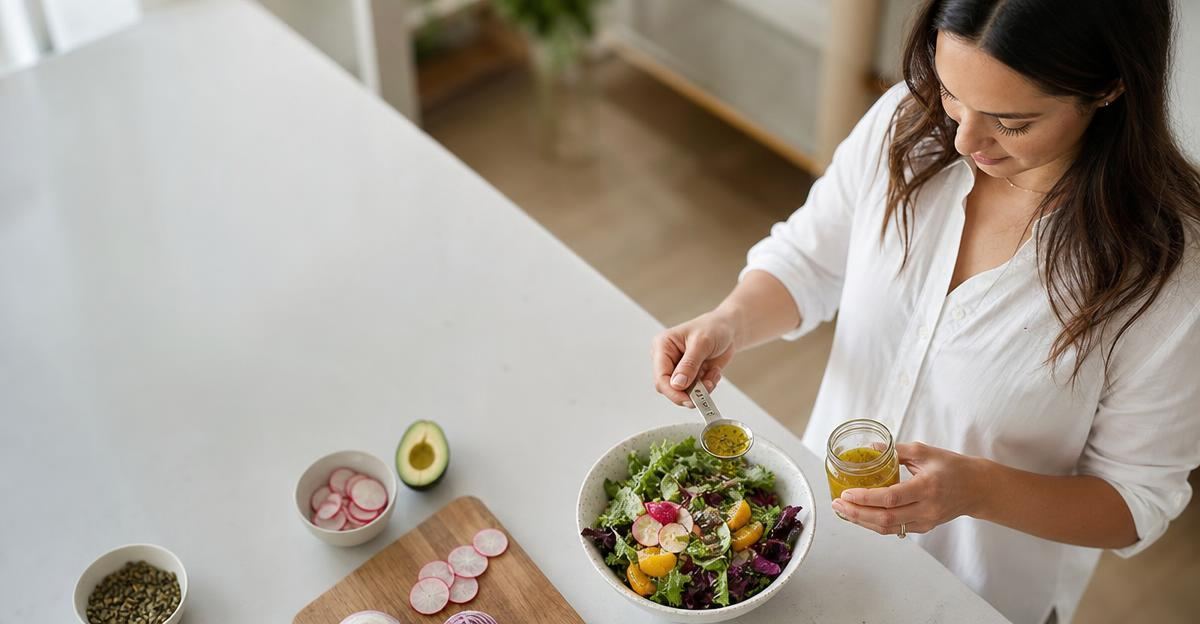
Sauces, dressings, and dips can transform a simple plate of food into something memorable. They can also complicate nutrition logging. A splash of hot sauce carries negligible energy, while two tablespoons of ranch dressing or aioli can quietly add over 150 calories.
When you want to maintain an accurate food diary without spending ten minutes dissecting every drizzle, you need a balanced approach. Obsessing over a dab of yellow mustard creates tracking fatigue, but ignoring heavy salad dressings can stall your progress. Here is how to keep your log accurate, practical, and stress-free.
Categorize Condiments: Zero-Impact vs. Energy-Dense
To streamline your daily logging, divide your condiments into two primary groups: free additions and calorie-dense extras.
Free additions contain minimal energy per serving and generally do not impact your daily totals. Unless you consume them in massive quantities, you can skip logging these entirely:
- Yellow or Dijon mustard
- Vinegar (apple cider, red wine, white, or balsamic in small dashes)
- Hot sauce (vinegar-based styles like Tabasco or Frank's)
- Soy sauce, tamari, and coconut aminos (though mindful of sodium)
- Pickles, relish (unsweetened), salsa, and citrus juice
Energy-dense condiments are fat-rich or sugar-heavy. Small volume differences here can meaningfully shift your daily intake:
- Mayonnaise, aioli, and creamy spreads
- Oil-based vinaigrettes and creamy salad dressings
- Barbecue sauce, sweet chili, and honey mustard (often high in added sugars)
- Peanut sauces, tahini, and pesto
- Butter, ghee, and sour cream
If you are already exploring whether you should you track non-starchy vegetables, the logic here is identical. Focus your time and mental energy on the items that make a measurable difference to your goals.
The Visual Gauge: Ditch the Measuring Spoon
Pulling out a measuring tablespoon at a dinner table or restaurant is impractical. Instead, train your eye using simple physical benchmarks to estimate high-impact sauces quickly.
- One teaspoon (about 5 grams / 40 calories of oil or mayo): roughly the size of the tip of your thumb down to the first knuckle.
- One tablespoon (about 15 grams / 100 to 120 calories of dressing or mayo): roughly the size of your entire thumb.
- Two tablespoons (about 1 standard salad dressing portion): roughly the size of a golf ball or ping-pong ball.
When a restaurant serves dressing in a small plastic ramekin, that container typically holds between two and four tablespoons. If you pour half of a standard two-ounce ramekin over your greens, you can confidently log one fluid ounce (two tablespoons) of dressing without second-guessing yourself.
Use Default Anchors for Speed
Rather than searching for the exact boutique brand of mayonnaise or salad dressing used at a local diner, establish standard default entries in your log.
According to nutritional benchmarks from the USDA FoodData Central, one tablespoon of standard mayonnaise provides approximately 94 calories and 10 grams of fat, while one tablespoon of olive oil provides about 119 calories and 14 grams of fat.
Pick one generic entry for "Creamy Dressing," "Oil and Vinegar Dressing," or "Mayonnaise" and use it consistently whenever you eat out. Daily consistency matters far more than forensic precision. Creating sustainable habits is all about balancing effort and outcome—much like when families look for how to get excellent value without sacrificing quality in daily care routines, simplifying your nutrition logging keeps your system sustainable over the long term.
Three Practical Rules for Frictionless Tracking
- Dip, Don't Pour: Ask for sauces on the side. Dipping your fork into the dressing before grabbing a bite gives you full flavor with a fraction of the volume, cutting logging uncertainty in half.
- Log the Fat, Ignore the Spice: If you are cooking a stir-fry, log the cooking oil and sweet sauces (like hoisin), but feel free to ignore the ginger, garlic, chili paste, and splash of rice vinegar.
- Round Up Slightly for Mystery Sauces: If a restaurant dish comes pre-tossed in a rich, glossy coating, add one tablespoon of olive oil or butter to your meal entry as a buffer, then move on with your day.
If you have specific medical conditions, such as kidney disease or heart failure where sodium and fluid balance require strict tracking, talk to your doctor or registered dietitian about exact measurements.
Keep Tracking Seamless
Logging your meals should support your life, not interrupt it. Stride makes capturing what you eat simple by letting you log meals from photos, alongside your workouts, steps, weight, sleep, and medications in one place. Try Stride today to bring all your daily health data together effortlessly.
Put this into practice with Stride
Log meals, training, weight and sleep in seconds, then get guidance that fits your own numbers.
Try Stride free