
How to Track Food on Vacation Without a Scale
Learn how to track food on vacation without a scale. Use practical portion estimates, photo logging, and balanced choices to enjoy your trip.
· 4 min read
Taking a trip should be a chance to recharge, explore new places, and enjoy local food. Yet if you have built a consistent tracking habit at home, the thought of traveling can bring a quiet tension. Kitchen scales, measuring spoons, and familiar grocery labels disappear the moment you pack your bags.
The good news is that nutrition tracking during travel does not require perfection to be useful. Shifting your mindset from forensic precision to thoughtful awareness lets you enjoy your trip while staying anchored to your health goals.
Redefine What Success Looks Like Away from Home
At home, success might mean measuring chicken breast down to the gram or logging every teaspoon of olive oil. On vacation, precision is almost impossible—and striving for it often adds unnecessary stress.
Instead, define success as keeping the habit alive through rough estimates and mindful choices. When you aim for good-enough data, you prevent the all-or-nothing mindset that often leads people to abandon tracking entirely for weeks at a time. Much like planning long-term care decisions where families look at how to get excellent value without sacrificing quality, managing nutrition on the road is about finding sensible compromises that preserve your long-term well-being without making life rigid.
Keep in mind that these strategies offer general wellness guidance. If you follow a medical diet prescribed by your doctor or dietitian, always prioritize their specific clinical advice.
Rely on Hand-Based Portion Estimation
When you do not have a digital scale on your table, your hand provides a reliable, portable reference point. While not down-to-the-gram exact, hand estimates give you enough data to keep your daily totals in a realistic ballpark.
Here is a practical framework to use at restaurants and street markets:
- Palm: A portion of protein (chicken, fish, tofu, or lean beef) roughly equal to the diameter and thickness of your palm is about 3 to 4 ounces cooked, or 20 to 30 grams of protein.
- Fist: A fist-sized serving approximates one cup, which works well for cooked rice, pasta, whole fruit, or dense vegetables.
- Cupped Hand: A single cupped palm equals roughly a half-cup, ideal for measuring nuts, beans, granola, or sauces.
- Thumb: The length and thickness of your thumb represents about one tablespoon, useful for oils, butter, salad dressings, and nut butters.
If you want to refine this skill before your trip, practicing how to estimate portions at restaurants without a scale during your regular weekly dining out can build your confidence before you ever board a plane.
Anchor Your Day Around Protein and Produce
Vacation meals frequently feature rich sauces, refined carbohydrates, and larger portion sizes. Instead of stressing over every bite of dessert or local bread, focus your energy on two anchors: protein and fiber.
The USDA Dietary Guidelines for Americans emphasize nutrient-dense core foods—such as lean proteins, vegetables, and whole fruits—because they support satiety and help maintain energy throughout busy days.
When ordering:
- Choose a clear protein source first. Look for grilled seafood, roasted meats, eggs, or legumes.
- Add a vegetable or fruit. Ask for a side salad, grilled greens, or fresh fruit with breakfast.
- Enjoy the regional specialties. Savor the pasta in Italy, the fresh pastries in France, or the barbecue in Texas without guilt. Because your baseline protein and fiber needs are met, you will naturally stay satisfied without feeling sluggish.
Use Visual Logging to Save Time
Manually searching for local dishes in a database while sitting at a dinner table can pull you out of the moment. Taking ten minutes to guess the oil content in a foreign sauce is rarely worth the distraction from your travel companions.
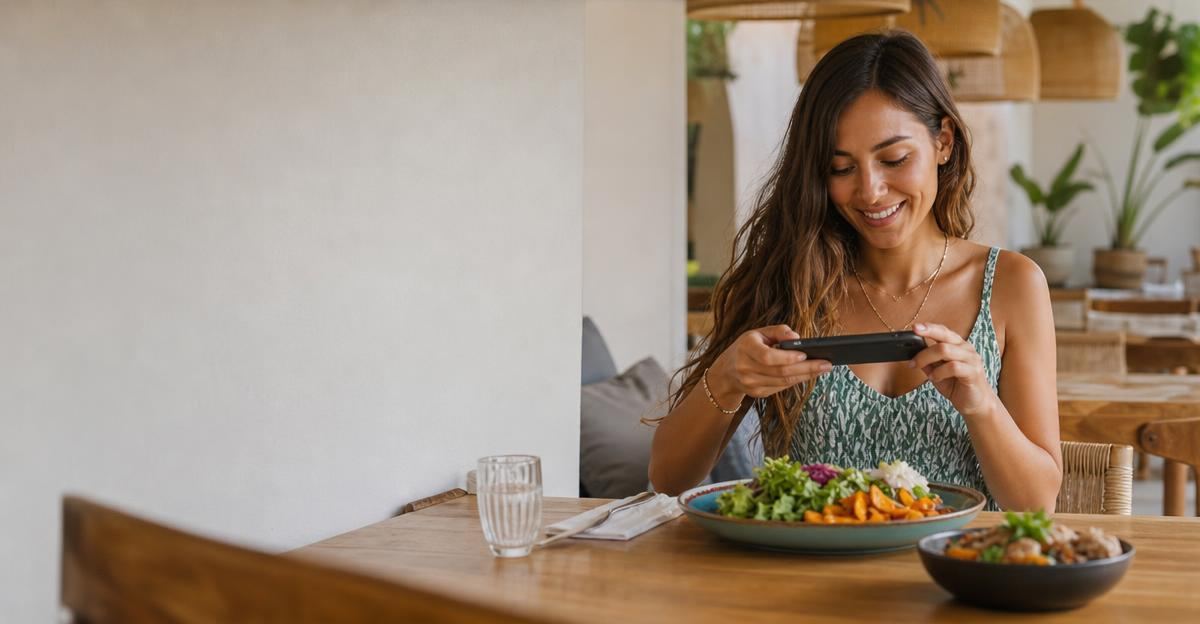
Visual logging offers a frictionless alternative. Snapping a quick photo of your plate takes two seconds. It creates a visual record of your meals that you can review later, or let smart tools estimate for you. Even if you do not calculate every calorie immediately, having a photo log maintains personal accountability and reminds you of what your day looked like as a whole.
Account for Hidden Oils and Travel Drinks
When eating out at cafes and restaurants, meals almost always contain more cooking fats than meals prepared at home. Chefs use generous amounts of butter, olive oil, and cooking wine to maximize flavor and texture.
To keep your logs realistic without overthinking:
- Add a buffer for cooking fat: If a restaurant dish looks glossy or rich, add an extra tablespoon of oil or butter to your daily log.
- Track liquid calories casually: Tropical cocktails, local beers, and sweetened specialty coffees can add up quickly during warm travel days. Alternate alcoholic or sugary drinks with a glass of sparkling or still water to stay hydrated.
Return Home Without Guilt
When you step back onto your home scale after a trip, remember that an initial bump in weight is rarely pure body fat. Changes in sodium intake, travel-related water retention, altered digestion, and late-night restaurant meals all temporarily increase fluid levels.
Vacations are meant to be lived fully. By using visual logging, hand portions, and mindful protein choices, you keep your momentum moving forward without missing out on the joy of travel.
If you are looking for a simple way to stay consistent on the go, try Stride to log meals, workouts, and weight in one place.
Put this into practice with Stride
Log meals, training, weight and sleep in seconds, then get guidance that fits your own numbers.
Try Stride free