

How to Track Buffet and Family-Style Meals Easily
Learn how to track buffet and family-style meals easily with visual portion cues, generic logging proxies, and stress-free social dining habits.
· 4 min read
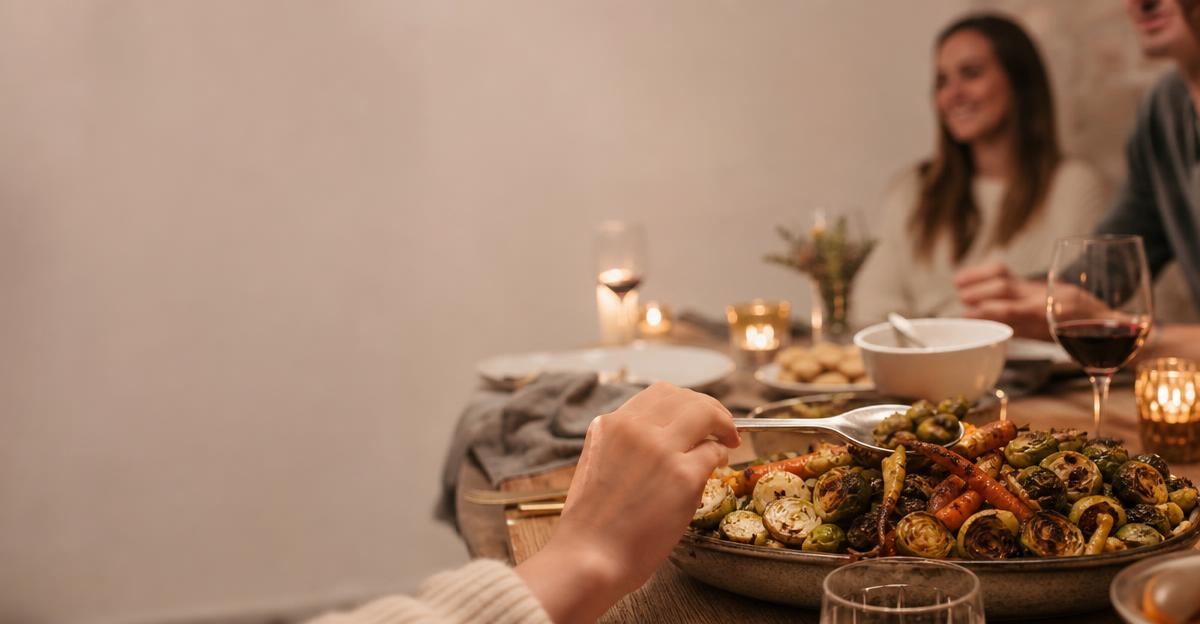
Sitting down to a holiday spread, a backyard barbecue, or a banquet buffet can trigger instant tracking fatigue. When food is passed around on shared platters or lined up in chafing dishes, you do not have nutrition labels, recipes, or a digital kitchen scale. Trying to parse every spoonful of casserole or mixed salad while socializing usually leads to two extremes: giving up entirely or stressing out over every bite.
Tracking shared meals does not require surgical precision. Nutrition logging is useful because it maintains consistency and awareness over time, not because it captures every microgram of butter. With a few practical frameworks, you can log family-style dinners and buffet spreads quickly, enjoy your gathering, and keep your health goals moving forward.
The One-Plate Visual Baseline
The easiest way to track a buffet or family-style dinner is to establish a visual baseline before you take your first bite. When dishes are served continuously, picking at small bites directly from serving trays makes it almost impossible to remember what you ate later.
Instead, assemble your meal on a single dinner plate first. Using a standard 9- or 10-inch plate acts as a physical boundary that makes mental estimation much simpler.
To break down the plate quickly:
- Half the plate for vegetables and fiber: Leafy greens, roasted carrots, steamed green beans, or vegetable stir-fries.
- One quarter for protein: Sliced roast, baked fish, tofu, or chicken breasts (roughly the size and thickness of your palm).
- One quarter for dense carbohydrates: Mashed potatoes, rice, dinner rolls, or pasta.
- Top accents for fats: Dressings, gravies, compound butters, and rich sauces (roughly the size of your thumb).
When you build your plate this way, you only need to log three or four distinct components rather than dozens of random grazings. If you are not sure how individual foods measure up visually, practicing how to estimate portions at restaurants without a scale can sharpen your eye for common serving sizes in social settings.
Use "Anchor Logging" for Complex Dishes
Buffets and holiday tables are famous for composite dishes: creamy potato gratins, sausage stuffing, and layered pasta bakes. Deconstructing every ingredient in a host's homemade recipe is unrealistic.
Instead, use anchor logging. Search your nutrition database for a standard, generic restaurant version of the dish. Commercial kitchen preparations tend to use generous amounts of cooking fats, oils, and seasonings, making them a safe, realistic proxy for rich home cooking.
According to the USDA FoodData Central, standardized entries for mixed dishes like baked ziti or vegetable casseroles already account for standard moisture loss and typical fat blends. Logging a cup of generic restaurant lasagna or scalloped potatoes will capture the energy density well enough to keep your daily averages accurate without asking your host for their secret recipe.
The "Two-Phase" Buffet Strategy
Buffets are uniquely challenging because of variety. When faced with twelve appealing dishes, human appetite naturally rises due to sensory-specific satiety. If you want to sample multiple items without feeling overwhelmed by your log, use a two-phase approach:
- Plate One (The Main Meal): Fill your plate following the visual baseline framework. Focus on lean proteins and recognizable vegetables first, along with a modest serving of the side dish you are most excited about. Log this as your primary meal.
- Plate Two (The Sampler): If you want to try other specialties, treat your second trip as a deliberate tasting. Pick two or three small items you genuinely want to savor, such as a specialty dessert or an artisanal side.
By logging your primary meal first, you only have to add one or two small entries for your tasting plate. This prevents mindless grazing while still allowing you to participate fully in the celebration.
Focus on Shared Moments, Not Perfection
Shared meals are deeply tied to family traditions, celebrations, and caregiving milestones. In homes where multiple generations gather, food often represents comfort and togetherness. Balancing your personal health routines while supporting family needs—a topic explored in depth in From Caregiver Fatigue To Family Empowerment—reminds us that nutrition tracking should support your life, not pull you away from the table.
If you are managing a clinical condition such as diabetes or hypertension, note that general tracking guidelines are educational and you should consult your doctor or registered dietitian for specific medical nutrition plans. For general wellness, remember that one loosely estimated family meal will not alter your progress over a month of consistent habits.
A 30-Second Tracking Routine for the Table
To keep dinner logging fast so you can get back to conversation:
- Snap a quick photo: Take a clear overhead photo of your plate before eating. This takes two seconds and preserves the portion memory for later.
- Enjoy your meal: Be present with the people around you rather than looking at your phone under the table.
- Log the meal afterward: Later that evening or the following morning, look at the photo and enter the three to five main items using generic composite entries.
Keeping the logging process simple removes friction and prevents social stress. Over time, building the habit of quick visual estimation gives you freedom in any dining scenario.
If you are looking for a simple, streamlined way to stay consistent, try Stride to log meals, workouts, and weight in one place.
Put this into practice with Stride
Log meals, training, weight and sleep in seconds, then get guidance that fits your own numbers.
Try Stride free