
How to Measure Serving Sizes Using Everyday Objects
Learn how to measure serving sizes using everyday objects like tennis balls, cards, and dice to make food logging fast, practical, and accurate.
· 4 min read
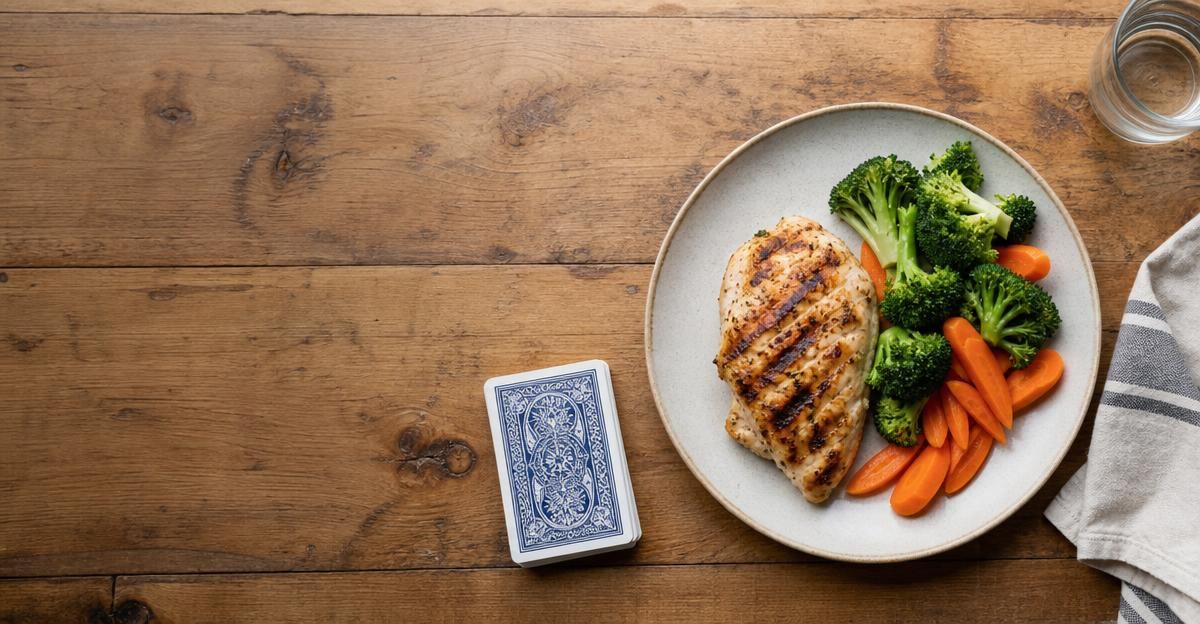
Weighing food on a digital kitchen scale gives you clear data, but carrying a scale everywhere is rarely practical. When you are eating at a friend's house, picking up lunch near the office, or serving family-style dinners at home, you need a quick way to gauge what is on your plate.
Using common household items as visual references bridges the gap between precision and convenience. It allows you to log meals with reasonable accuracy without disrupting your routine or making mealtime stressful.
Why Visual References Work
Estimating portion size by sight is a learned skill. Most people unintentionally underestimate calorie-dense items like oils, nuts, and meats, while overestimating fibrous vegetables.
Having concrete mental models helps calibrate your eyes. Instead of wondering what three ounces of chicken or a half cup of brown rice looks like, you can compare the item directly to an object you see every day.
If you are already familiar with practical strategies like how to estimate portions at restaurants without a scale, you know that consistent approximations keep your tracking consistent over time.
Proteins: The Deck of Cards and Palm Rule
Protein sources vary widely in density, but standard single servings share common dimensions.
- Deck of playing cards or palm of your hand: Represents approximately 3 ounces of cooked meat, poultry, or fish. This amount typically delivers between 20 and 26 grams of protein.
- Checkbook: Represents about 6 ounces of lean fish, like a fillet of salmon or cod.
- Two pairs of dice: Represents roughly 1 ounce of hard cheese. Because cheese is calorie-dense, keeping this small visual in mind prevents accidental over-portioning.
- Large egg: A handy reference for roughly 1/4 cup of chopped meat, tofu cubes, or seafood.
For general wellness or managing specific conditions like diabetes, knowing your baseline protein portions helps maintain steady energy throughout the day. Please remember that nutritional needs vary, and this is general information rather than clinical advice; speak with a registered dietitian or doctor for personalized targets.
Carbohydrates: Baseballs, Tennis Balls, and Lightbulbs
Carbohydrate density depends heavily on water content and how tightly packed the food is.
- Fist or baseball: Represents roughly 1 cup. Use this reference for leafy raw greens, fresh berries, whole fruit like an apple or orange, and ready-to-eat cereal.
- Tennis ball or standard lightbulb: Represents approximately 1/2 cup to 2/3 cup. This is the ideal visual cue for cooked grains (rice, quinoa, oats), cooked pasta, and starchy vegetables like sweet potatoes or corn.
- Hockey puck: Represents a standard single bagel half, English muffin, or thick pancake.
The Dietary Guidelines for Americans emphasize building balanced plates where fiber-rich grains and whole vegetables occupy a substantial share of your daily volume.
Fats and Spreads: Dice, Thumb Tips, and Bottle Caps
Fats are calorie-dense, meaning small estimation errors can quickly add up. Using physical reference points is especially helpful here.
- Tip of your thumb (from the top knuckle to the tip): Represents roughly 1 teaspoon. This matches standard portions of butter, mayonnaise, or olive oil.
- Whole thumb (from base to tip) or a poker chip: Represents approximately 1 tablespoon. Use this for peanut butter, salad dressing, cream cheese, or sour cream.
- Golf ball: Represents about 2 tablespoons (1/8 cup). This is a standard single serving for dips like hummus, guacamole, or salad dressings on larger bowls.
- Cupped palm: Represents about 1 to 1.5 ounces of loose nuts, seeds, or trail mix.
Snacks, Fruits, and Everyday Independence
Gauging what you eat should support your lifestyle, not complicate it. Simple visual tools build self-reliance in the kitchen, supporting the type of self-care detailed in Everyday Independence A Guide To Activities Of Daily Living.
Here are quick visual comparisons for everyday produce and snacks:
- Yo-yo or small plum: Represents about 1/2 cup of dried fruit or canned fruit packed in juice.
- Computer mouse: Represents a medium baked potato or sweet potato (about 6 to 8 ounces).
- Two ping-pong balls: Represents roughly 2 tablespoons of liquid or sauce.
Tips for Calibrating Your Eye
To make these mental shortcuts stick, try a simple calibration exercise over the next week:
- Serve first, then check: Dish out what you believe is 1/2 cup of rice or 3 ounces of chicken using an everyday visual object as your guide.
- Weigh or measure once: Place it on a digital scale or in a measuring cup just to check your accuracy.
- Note the difference: Notice whether your natural tendency is to over-serve or under-serve that specific food.
Within a few days, your mental models will match real measurements closely enough to log meals confidently without needing tools at every meal.
When you are ready to simplify your daily routine, you can use Stride to log meals from quick photos, monitor your workouts, and track your weight trends all in one seamless dashboard.
Put this into practice with Stride
Log meals, training, weight and sleep in seconds, then get guidance that fits your own numbers.
Try Stride free