
How to Estimate Vitamins and Minerals by Food Portion
Learn how to estimate daily vitamins and minerals using simple visual food portions. Build balanced, nutrient-dense meals without tedious measuring.
· 4 min read
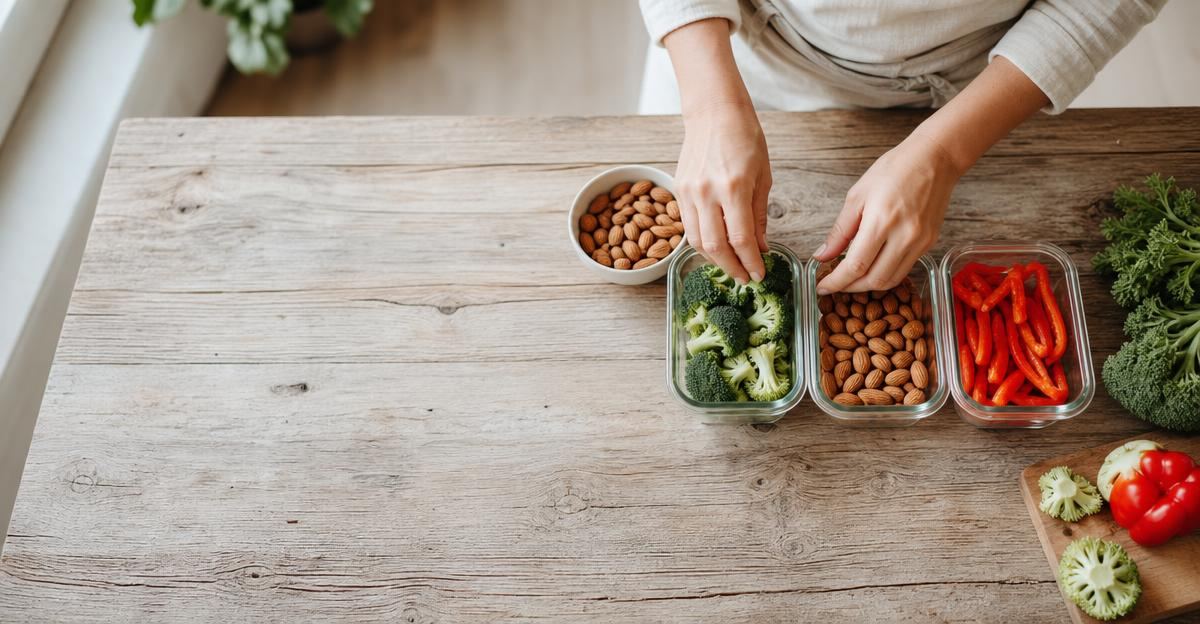
When tracking nutrition, most people focus heavily on macronutrients—protein, carbohydrates, and fats. Yet the micronutrients riding along with those macros play an equally vital role in energy production, immune function, and recovery.
Trying to weigh every single leafy green, berry, or seed to the exact gram to calculate micronutrients can quickly lead to tracking burnout. Fortunately, you do not need laboratory precision to ensure you hit your daily micronutrient targets. Understanding how key vitamins and minerals map to standard visual portions allows you to gauge your daily intake accurately and sustainably.
Why Micronutrient Density Follows Portion Volume
Micronutrients do not exist in isolation; they are packed into the cellular matrix of whole foods. Because of this, certain food groups provide predictable clusters of vitamins and minerals per standard serving size.
When you learn how a palm-sized portion of protein, a fist of cruciferous vegetables, or a cupped hand of fruit translates into essential nutrients, your daily tracking becomes significantly faster. While people often debate whether to log every raw ingredient—a topic we explore when looking at should you track non-starchy vegetables—understanding portion-based micronutrient density helps you ensure your plate is nutritionally complete without unnecessary friction.
For baseline planning, reviewing the official Dietary Guidelines for Americans offers clear targets for daily nutrient intake across different age groups and activity levels.
Visual Portions for Common Vitamins
Here is how common visual portions translate into key vitamin groups:
Vitamin A and Carotenoids
- Visual Portion: One medium sweet potato or one cup of raw carrots (about the size of your closed fist).
- Nutrient Payoff: Beta-carotene, which the body converts into active vitamin A. A single fist-sized serving of orange root vegetables or dark leafy greens generally provides more than 100% of your daily recommended intake for eye and immune health.
Vitamin C
- Visual Portion: One medium orange, one cup of sliced bell peppers, or one cup of whole strawberries (one fist).
- Nutrient Payoff: Vitamin C supports collagen synthesis and antioxidant defense. A single cupped-hand or fist-sized portion of these raw produce items easily covers your entire daily requirement.
Vitamin K and Folate (B9)
- Visual Portion: Two loose cupped hands of raw dark leafy greens (spinach, kale, or Swiss chard) or one compact fist of cooked greens.
- Nutrient Payoff: Dark greens are among the most nutrient-dense foods available. Two handfuls raw provide several times the baseline daily need for vitamin K, alongside substantial amounts of natural folate.
Vitamin E
- Visual Portion: One thumb-sized portion (about one ounce or two tablespoons) of sunflower seeds, almonds, or extra virgin olive oil.
- Nutrient Payoff: Vitamin E is fat-soluble and concentrated in plant lipids. A single thumb-sized addition to a meal delivers roughly one-third to one-half of your daily antioxidant lipid defense.
Visual Portions for Essential Minerals
Minerals often require slightly larger or more consistent portions throughout the day to meet recommended thresholds:
Calcium
- Visual Portion: One fist-sized cup of plain Greek yogurt, 1.5 thumb-sized slices of hard cheese, or two cups of cooked dark leafy greens like collard greens.
- Nutrient Payoff: Each of these standard servings provides approximately 200 to 300 milligrams of elemental calcium, putting you well on your way toward a standard daily target of 1,000 milligrams.
Iron and Zinc
- Visual Portion: One palm-sized serving (roughly 3 to 4 ounces cooked) of lean beef, poultry thighs, or one cupped hand of cooked lentils.
- Nutrient Payoff: Animal sources deliver bioavailable heme iron and zinc, whereas legumes provide non-heme iron accompanied by fiber. A palm-sized portion of red meat or lentils generally covers 20% to 40% of daily iron needs.
Magnesium and Potassium
- Visual Portion: One medium banana (potassium), half a medium avocado (potassium and magnesium), or one cupped hand of cooked black beans.
- Nutrient Payoff: Potassium and magnesium are essential electrolytes that support muscle contraction and fluid balance. Combining one fist of beans and half an avocado supplies meaningful amounts of both minerals in a single meal.
For those navigating complex dietary restrictions or managing chronic deficiencies, coordinating with a primary provider or consulting services through medical.life can help ensure your specific clinical needs are met safely.
Practical Rules for Daily Balance
You do not need to memorize the exact milligram content of every food to maintain high nutritional quality. Using a few simple rules of thumb will keep your vitamin and mineral intake consistent:
- Aim for Three Produce Colors Daily: Different pigments indicate different micronutrient profiles. Green usually signals vitamin K, folate, and lutein; orange and red point to vitamins A and C; deep blue and purple indicate polyphenols.
- Pair Fat-Soluble Vitamins with Healthy Fats: Vitamins A, D, E, and K require dietary fat for optimal absorption. When eating a large bowl of dark leafy greens or roasted carrots, include a thumb-sized serving of olive oil, avocado, or nuts.
- Keep Whole Grains and Legumes in Cupped-Hand Portions: These foods provide steady B-complex vitamins, magnesium, and trace minerals like selenium and copper.
*Note: This article is for general informational purposes only and does not constitute medical or nutritional advice. If you suspect a nutrient deficiency, consult a physician or registered dietitian for personalized guidance and testing.*
Tracking your daily nutrition should empower you, not add stress to your routine. Try Stride to log your meals from photos, track your workouts, and monitor your weight all in one seamless place.
Put this into practice with Stride
Log meals, training, weight and sleep in seconds, then get guidance that fits your own numbers.
Try Stride free