
Blackberry Calories: Nutrition and Tracking Guide
Explore blackberry calories, macros, and fiber benefits. Learn practical tips for accurate tracking and fitting fresh berries into your daily routine.
· 4 min read
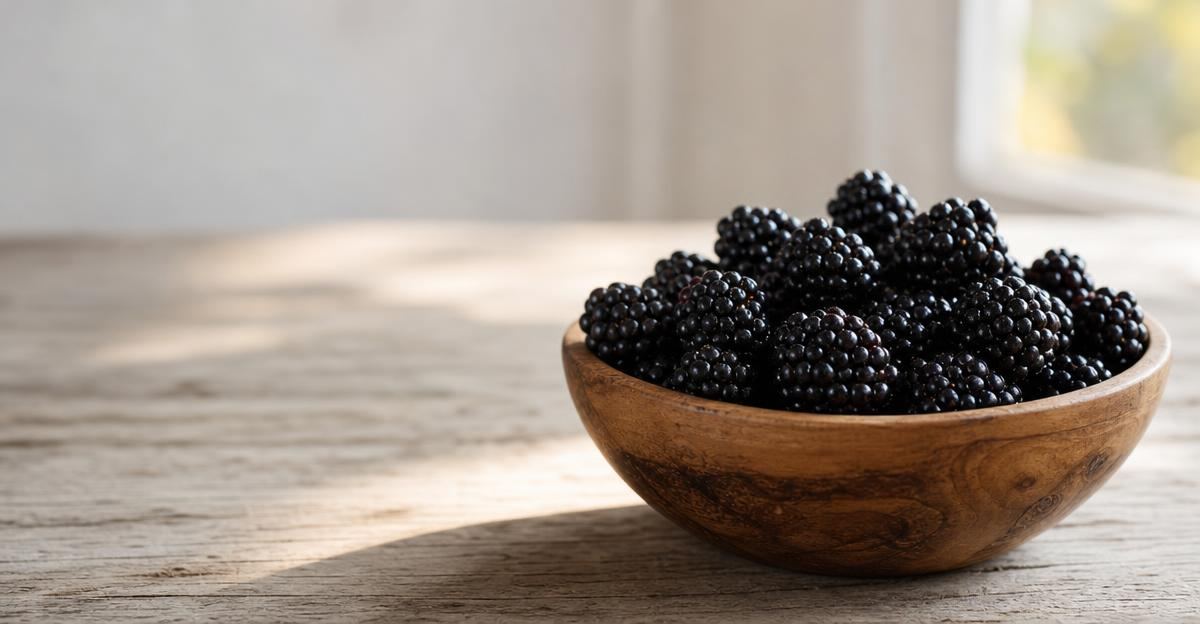
Fresh berries often feel like a free pass in daily nutrition. They are sweet, hydrating, and easy to snack on by the handful. Yet, if you are actively managing your energy balance, understanding blackberry calories and their broader nutritional profile can make logging your meals both effortless and accurate.
Blackberries stand out among fruit because of their remarkable ratio of dietary fiber to total carbohydrates. While they taste naturally sweet, they deliver far fewer usable calories than most people expect.
Breaking Down Blackberry Calories and Macros
When you grab a cup of fresh blackberries, you are getting an nutrient-dense snack with very little caloric impact.
According to standardized USDA FoodData Central nutrient profiles, a standard one-cup serving (about 144 grams) of raw blackberries contains:
- Calories: ~62 kcal
- Protein: 2 grams
- Fat: Less than 1 gram
- Total Carbohydrates: ~14 grams
- Dietary Fiber: ~8 grams
- Net Carbohydrates: ~6 grams
- Natural Sugars: ~7 grams
If you weigh your fruit on a kitchen scale, 100 grams of fresh blackberries comes out to roughly 43 calories.
The most striking number here is the fiber content. Over half of the total carbohydrate count in a blackberry consists of soluble and insoluble fiber. This high fiber density slows digestion, blunts sharp rises in blood sugar, and helps you feel genuinely satisfied after eating.
Why Blackberries Fit Almost Any Nutrition Goal
Whether you are targeting fat loss, supporting endurance training, or simply building balanced plates, blackberries offer distinct practical advantages.
High Satiety on a Lower Energy Budget
When reducing your caloric intake, volume and chew time matter. Snacking on a cup of blackberries gives you physical volume and eight grams of fiber for just 62 calories. Compared to dried fruit or processed snack bars, whole berries fill more physical space in your stomach, triggering satiety cues earlier.
Micronutrients and Dark Pigments
The deep purple, almost black hue of the fruit comes from anthocyanins, a family of plant polyphenols with strong antioxidant properties. Blackberries are also rich in vitamin C and vitamin K, alongside manganese. If you are coordinating broader health markers or discussing dietary shifts with a provider through medical.life, whole fruits rich in diverse polyphenols are frequently recommended as staples for cardiovascular and metabolic support. Note that general dietary information does not replace personalized medical advice; always speak to a clinician about specific health conditions.
Versatility Without Recipe Complexity
Because they hold up well fresh or frozen, you do not need complicated prep work to use them. You can toss a handful into morning oats, blend frozen berries into a post-workout protein shake, or fold them into plain Greek yogurt for an afternoon snack.
How to Log Blackberries Accurately
Tracking fruit can sometimes feel tedious, but keeping it simple prevents logging fatigue. Deciding whether you should meticulously weigh every single berry comes down to your personal goals and routine.
Much like deciding whether you should you track non-starchy vegetables, the precision you need with low-calorie berries depends on context:
- For Casual Snacking: If you eat a small palmful directly from the fridge, estimating a quarter cup (roughly 15 to 20 calories) is more than close enough.
- For Meal Bowls and Smoothies: When adding berries to a bowl of yogurt or oatmeal, weighing the bowl on a digital scale in grams takes two seconds and removes any guesswork.
- Fresh vs. Frozen: Raw and unsweetened frozen blackberries have virtually identical calorie and macronutrient counts per gram. However, watch out for frozen berry blends with added sugar or syrups, which dramatically alter the caloric profile.
Common Blackberry Tracking Pitfalls
While fresh blackberries are simple to log, a few common preparation habits can quietly alter your numbers:
- Cooking Reductions and Compotes: Simmering blackberries on the stove reduces their water volume. A half-cup of cooked berry compote contains significantly more berries—and therefore more calories—than a half-cup of whole, airy berries.
- Added Sweeteners: Many restaurant dishes or dessert toppings toss blackberries in simple syrup or granulated sugar to enhance their gloss and sweetness. When logging restaurant dishes, account for added sugars.
- Juicing: Juicing blackberries extracts the water and sugar while discarding the fibrous pulp. This concentrates the calories and removes the primary element responsible for steady digestion.
Making Daily Logging Simple
Blackberries prove that satisfying your sweet tooth does not require a large calorie budget. With eight grams of fiber per cup and just over 60 calories, they fit smoothly into almost any nutrition plan.
To keep tabs on your daily nutrition without spending hours in a spreadsheet, try Stride to log meals, workouts, and weight in one place.
Put this into practice with Stride
Log meals, training, weight and sleep in seconds, then get guidance that fits your own numbers.
Try Stride free