
Banana Calories and Nutrients: Small vs. Large Bananas
Compare calories, carbohydrates, and nutrients between small and large bananas, plus practical tips for estimating portions and logging fruit.
· 4 min read
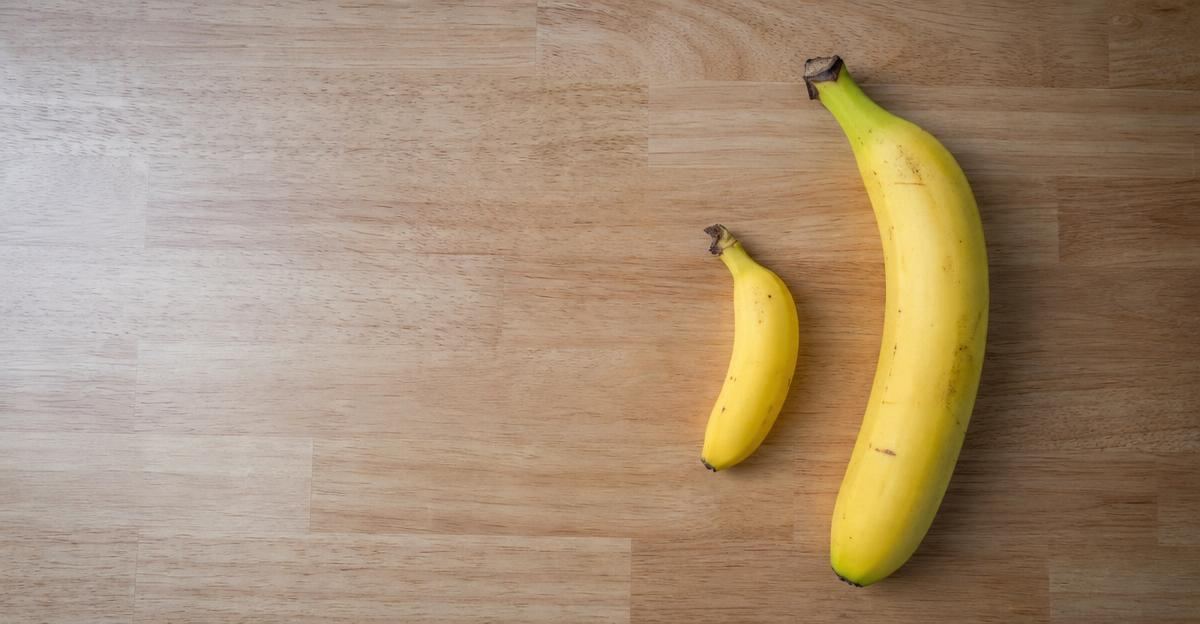
Bananas are one of the most convenient foods you can keep in your kitchen. They come in their own packaging, stay shelf-stable for days, and provide quick carbohydrate energy before a workout or as a mid-afternoon snack. Yet when you log a banana into a nutrition tracker, you might notice a surprisingly wide range of calorie counts, from 70 to over 135 calories.
Understanding how portion size, ripeness, and micronutrient profiles shift between a small and an extra-large banana helps you log more accurately without needing to stress over minor details.
The Real Calorie Difference by Size
Fruit does not grow in standardized factory molds. A single bunch from the grocery store can contain fruit ranging from under six inches to nearly nine inches long. Because water and carbohydrates make up the bulk of a banana's weight, physical size directly dictates its caloric value.
According to standard food data compiled in the USDA FoodData Central database, here is how raw bananas break down across common standard sizes:
- Extra small (under 6 inches, ~81g): ~72 calories, 19g carbohydrates, 2g fiber
- Small (6 to 7 inches, ~101g): ~90 calories, 23g carbohydrates, 2.6g fiber
- Medium (7 to 8 inches, ~118g): ~105 calories, 27g carbohydrates, 3g fiber
- Large (8 to 9 inches, ~136g): ~121 calories, 31g carbohydrates, 3.5g fiber
- Extra large (9 inches or longer, ~152g): ~135 calories, 35g carbohydrates, 4g fiber
While a 45-calorie difference between an extra-small and a large banana might not seem massive in isolation, logging three or four oversized bananas a week as "small" can subtly skew your weekly energy tracking. If you are tracking intake toward a specific deficit or surplus, estimating the size category accurately gives you a clearer picture of your daily baseline. For those transitioning away from manual math, photo meal logging vs. manual entry can help capture physical dimensions visually without pulling out a kitchen scale every time.
Macronutrients and Ripeness: What Changes?
Across all sizes, bananas are essentially fat-free (less than 0.5 grams) and contain modest amounts of protein (about 1 to 1.5 grams per fruit). The real story is carbohydrates.
As a banana ripens, enzymes break down complex resistant starch into simple sugars like glucose, fructose, and sucrose.
- Green or slightly green bananas: Higher in resistant starch and lower in free sugars. Resistant starch acts like soluble fiber in your digestive tract, feeding beneficial gut bacteria and slowing gastric emptying.
- Yellow, speckled bananas: Lower in resistant starch, higher in simple sugars. These provide faster-digesting carbohydrates, making them ideal right before high-intensity training or endurance runs.
The total calorie content remains nearly identical throughout the ripening process—the chemical structure of the carbohydrates simply shifts.
Micronutrients: More Than Just Potassium
Bananas are best known for potassium, but they deliver several essential micronutrients regardless of size:
Potassium
An average medium banana contains roughly 420 milligrams of potassium, which supports fluid balance, muscular contraction, and healthy blood pressure regulation. A large banana delivers closer to 490 milligrams.
Vitamin B6
Bananas are an exceptional source of vitamin B6 (pyridoxine). A single medium banana covers roughly a third of your daily requirement. Vitamin B6 plays a central role in protein metabolism, red blood cell production, and neurotransmitter synthesis.
Vitamin C and Magnesium
You also receive around 10 milligrams of vitamin C (about 10–12% of daily value) and roughly 32 milligrams of magnesium, an essential mineral involved in energy production and muscle relaxation.
Managing nutrient intake is a foundational piece of long-term wellness at every stage of life. Just as whole-food nutrition supports active adults, specialized care programs recognize that personalized support matters across the lifespan—even in late-stage care, where resources like You Dont Need A Large Family To Access Excellent Hospice Care What Life Hospice Offers Summit Residents Living Alone ensure individuals receive attentive, individualized daily attention.
Practical Tips for Logging Bananas
You do not need to weigh every single banana you eat on a gram scale to make steady health progress. Use these practical guidelines:
- Use your hand as a visual ruler: The distance from the base of your palm to the tip of your middle finger is roughly 7 to 7.5 inches for most adults. If the edible portion of the banana matches that length, log it as a medium. If it extends past your wrist, treat it as a large.
- Weigh once for reference: If you have a food scale at home, peel a typical banana from your usual grocery haul and weigh it once. Once you see what 120 grams looks like on your counter, your visual estimates will be accurate for months.
- Log sliced or frozen bananas by volume: Sliced bananas pack tightly. One cup of sliced raw banana weighs approximately 150 grams and delivers about 134 calories. If you make morning smoothies, measuring frozen slices by the half-cup or cup is far more accurate than guessing how many whole bananas went into the bag.
Nutritional tracking is general information meant to build self-awareness, not rigid dietary rules; speak with a registered dietitian or clinician if you have specific metabolic conditions such as kidney disease or diabetes that require strict electrolyte or carbohydrate management.
Keeping an accurate log of your daily nutrition does not have to be complicated. Download Stride to log meals, workouts, and weight in one simple place.
Put this into practice with Stride
Log meals, training, weight and sleep in seconds, then get guidance that fits your own numbers.
Try Stride free