
Avocado Calories: Serving Sizes and Accurate Tracking Guide
Learn standard avocado calories, serving sizes, and practical portion tips to track healthy fats accurately without overcomplicating meal logging.
· 4 min read
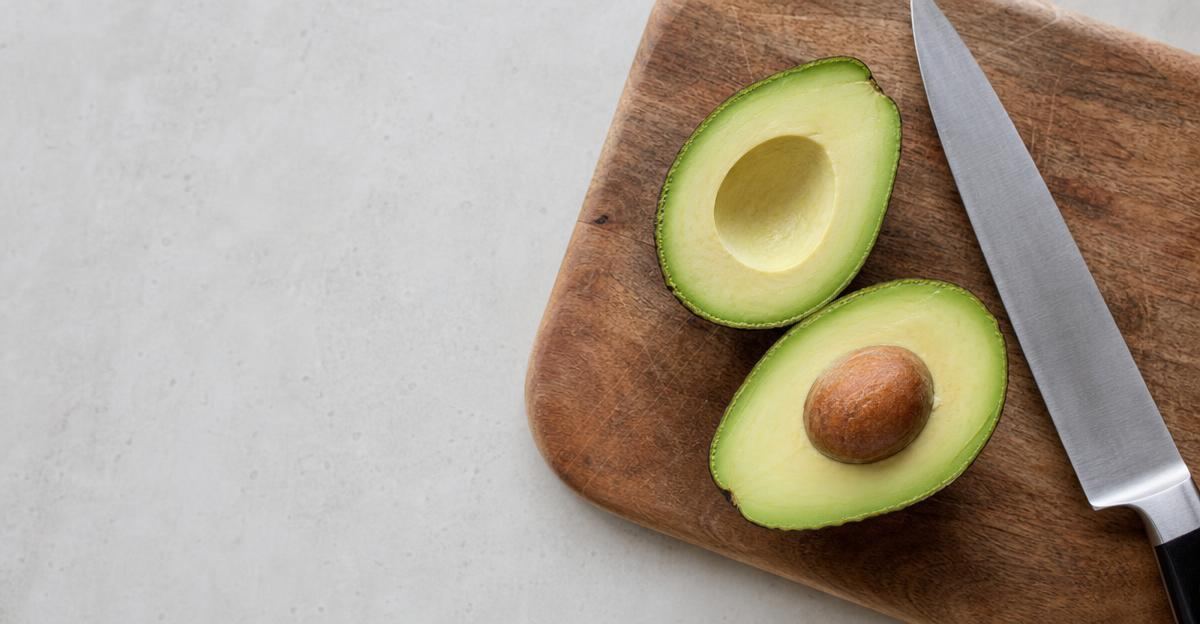
Avocados have earned their place as a staple in balanced diets, bringing creamy texture, heart-healthy fats, and rich micronutrients to everything from morning toast to evening grain bowls. Yet when it comes to logging meals, avocados frequently confuse even diligent trackers.
A single whole fruit can range anywhere from 200 to well over 350 calories depending on variety and size. Because dietary fat contains 9 calories per gram—compared to 4 calories per gram for protein and carbohydrates—small differences in portion estimation add up quickly. Understanding how to gauge avocado servings accurately helps you enjoy their nutritional benefits while keeping your daily energy balance on target.
Why Avocado Calorie Counts Vary So Widely
If you search a generic nutrition database for "one avocado," you might find entries listing 160 calories right alongside entries claiming 320 calories. Both can be correct depending on the fruit's origin and weight.
Most grocery stores in the United States stock Hass avocados, which are small to medium, have pebbled dark skins, and boast a higher fat concentration. According to the USDA FoodData Central database, raw Hass avocado provides approximately 160 calories per 100 grams of edible flesh. A standard medium Hass avocado without the seed and peel typically yields between 130 and 150 grams of flesh, landing the total count around 210 to 240 calories.
By contrast, Florida avocados (often labeled as green-skin varieties) are significantly larger with smooth skin. They contain more water and less fat by weight—roughly 120 calories per 100 grams—but because an individual fruit can weigh 300 grams or more, eating a whole Florida avocado might still deliver upwards of 360 calories.
Standard Serving Sizes and What They Look Like
Nutrition labels define an official serving of avocado as 50 grams, which is roughly one-third of a medium Hass avocado. Here is how standard measurements translate to calories and macronutrients:
- 50 grams (1/3 medium avocado): ~80 calories, 7.5g fat, 4.5g carbohydrates, 3.4g fiber, 1g protein
- 75 grams (1/2 medium avocado): ~120 calories, 11g fat, 6.5g carbohydrates, 5g fiber, 1.5g protein
- 150 grams (1 whole medium avocado): ~240 calories, 22g fat, 13g carbohydrates, 10g fiber, 3g protein
- 1 tablespoon mashed or pureed: ~23 calories, 2g fat, 1g carbohydrates
If you do not have a food scale nearby, visual cues work well in a pinch. One serving (50 grams) is roughly the size of a golf ball when scooped, or about two to three thin slices spread across toast. Learning how to estimate portions at restaurants without a scale can keep your estimates reliable when you are dining out or eating guacamole at social gatherings.
Accounting for Fiber and Satiety
When evaluating avocado calories, looking solely at total energy misses a key part of the picture. Avocados are uniquely high in dietary fiber. In a 100-gram serving providing about 8.5 grams of total carbohydrates, nearly 7 grams come directly from fiber.
This combination of monounsaturated fatty acids and soluble and insoluble fiber slows gastric emptying and helps moderate blood sugar spikes after meals. While you still want to log the total energy accurately for your daily deficit or surplus targets, the high satiety value of whole-food fats often makes managing hunger easier across the rest of the day.
If you are managing specific metabolic concerns or lipid targets, consider discussing optimal dietary fat ratios with your physician or a specialist through medical.life for individualized care.
Practical Strategies for Fast and Accurate Logging
You do not need to obsess over every gram to make meaningful progress, but a few consistent habits will keep your nutrition logs grounded in reality:
- Weigh the flesh, not the peel: If you use a kitchen scale, place your plate or bowl on the scale, hit tare to zero it out, and scoop your portion directly onto the dish. This ensures you only log the edible fruit rather than the pit and skin.
- Standardize your default entry: If you consistently buy medium Hass avocados, save a custom food entry for "1/2 medium avocado (75g)" in your tracker. Having your regular portion pre-set removes daily friction.
- Be mindful of restaurant guacamole: Commercial guacamole often includes added oils, sour cream, or large amounts of salt. Unless the kitchen prepares it tableside with just produce and citrus, estimate slightly higher on calories to account for added fats.
- Use photo recognition for quick meals: When preparing complex salads or bowls with avocado slices, visual logging tools can estimate the volume without requiring you to deconstruct every ingredient.
Building sustainable nutritional habits comes from clarity rather than restriction. When you understand how calorie density works in wholesome foods like avocados, you can fit them into your routine confidently.
Try Stride to log meals, workouts, and weight in one place.
Put this into practice with Stride
Log meals, training, weight and sleep in seconds, then get guidance that fits your own numbers.
Try Stride free