
Tracking Fiber Intake by Serving Size
Learn how to estimate dietary fiber by visual serving size. Practical portion guides for fruit, vegetables, beans, and grains without using a scale.
· 5 min read
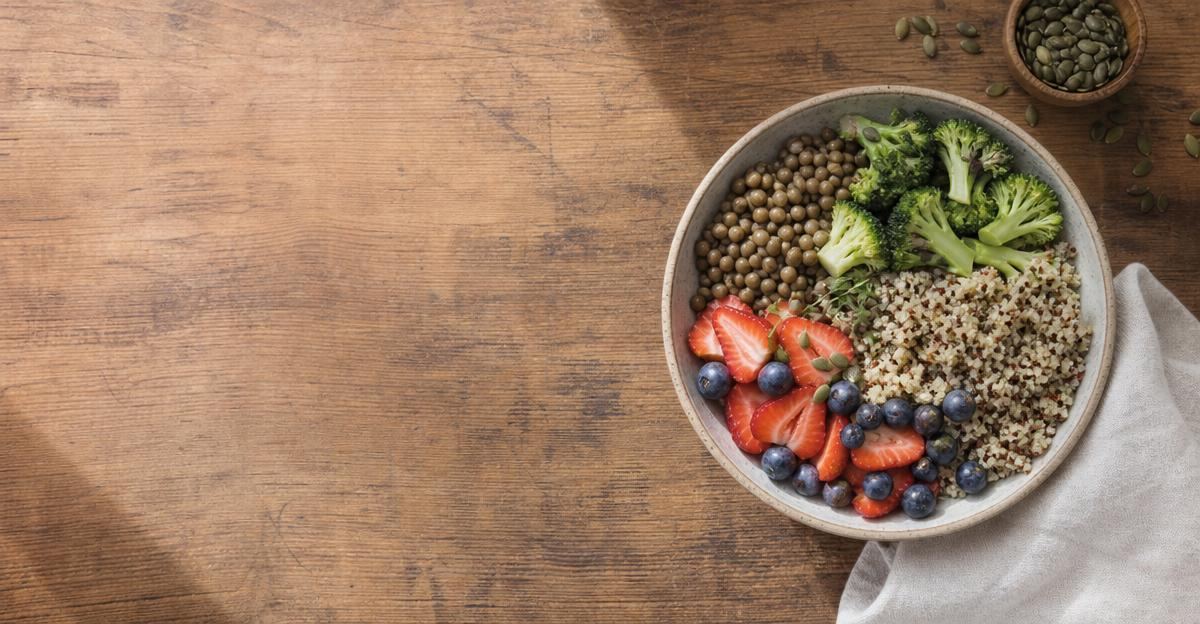
Getting enough dietary fiber supports steady energy, smooth digestion, and reliable satiety between meals. Yet when people decide to increase their intake, they often run into a common frustration: guessing how much fiber is actually on their plate. Measuring every vegetable or piece of fruit with a kitchen scale can quickly turn daily nutrition into an exhausting chore.
Understanding how fiber scales by visual serving size makes hitting your daily targets straightforward. Instead of worrying about gram-level precision for every bite, you can use practical portion cues to build fiber-rich meals with confidence.
Why Visual Sizing Works for Fiber
Most high-fiber foods fall into distinct categories: whole fruits, raw leafy greens, dense vegetables, legumes, and whole grains. Because dietary fiber is structurally tied to the plant matrix, its content scales predictably with volume.
The Dietary Guidelines for Americans recommend that adults consume roughly 28 to 34 grams of fiber daily, depending on age and biological sex. Most people average less than half of that amount. Trying to close that gap overnight with hyper-precise measurements often leads to burnout. By using common visual references—such as your fist, a cupped hand, or standard cup measures—you can gauge your fiber intake accurately enough to see real benefits without slowing down your day.
When you are deciding how to track multi-ingredient home-cooked meals fast, categorizing fiber sources by their typical serving sizes simplifies logging significantly.
Sizing Whole Fruits: Small, Medium, and Large
Fruit fiber is concentrated in the skins, seeds, and edible flesh. While water content varies, standard produce sizes provide reliable fiber ranges:
- Medium Apples and Pears (Baseball size): A medium apple or pear (about 3 inches in diameter) provides roughly 4 to 6 grams of fiber. Eating the skin is essential, as peeling removes nearly half the total fiber.
- Berries (Cupped hand / 1 cup): Berries are among the most fiber-dense fruits. One cup of raspberries or blackberries yields approximately 8 grams of fiber, while a cup of blueberries or sliced strawberries provides 3 to 4 grams.
- Oranges and Citrus (Tennis ball size): A standard medium orange delivers about 3 grams of fiber, largely contained in the white pith and segment membranes.
- Bananas (Medium, 7–8 inches): A medium banana offers around 3 grams of dietary fiber alongside easily digestible carbohydrates.
If you eat a large piece of fruit—like a jumbo honeycrisp apple that fills your entire palm—you can reasonably count it as 1.5 standard servings, bringing your fiber estimate closer to 6 to 8 grams.
Vegetables: Raw Volume vs. Cooked Density
Vegetables present the biggest visual challenge because cooking alters their volume dramatically. A massive bowl of raw spinach wilts down to just a couple of tablespoons in a hot pan.
Raw Leafy Greens
Raw salad greens (spinach, romaine, arugula, mixed greens) are light and airy.
- Two loose fists (about 2 cups): Provides roughly 1 to 2 grams of fiber. Because raw greens take up space without offering massive fiber totals, you can enjoy generous portions without meticulously logging small amounts.
Dense Raw Vegetables
Cruciferous and root vegetables hold their shape when raw.
- One fist (about 1 cup of chopped carrots, broccoli florets, or bell peppers): Delivers roughly 3 to 4 grams of fiber.
Cooked Vegetables
Heat breaks down cellular structures and removes water, concentrating nutrients.
- One fist (about 1 cup of cooked broccoli, Brussels sprouts, or green beans): Provides 4 to 6 grams of fiber.
- Cooked leafy greens (1/2 cup cooked spinach or kale): Provides about 2 to 3 grams of fiber.
A helpful rule of thumb: one cup of cooked dense vegetables generally provides twice the fiber of the same visual volume of raw leafy salad.
Legumes, Grains, and Seeds
Starchy plant foods are dense sources of both soluble and insoluble fiber. Because these foods expand when boiled, visual sizing after cooking is the most reliable approach.
Beans and Lentils
Legumes are nutritional powerhouses for gut health.
- Cupped palm (1/2 cup cooked black beans, chickpeas, or lentils): Delivers an impressive 7 to 8 grams of fiber.
- Full fist (1 cup cooked lentils): Provides about 15 grams—more than half the daily target for many adults.
Whole Grains
Whole grains retain the bran and germ, offering substantial fiber compared to refined counterparts.
- Cupped palm (1/2 cup cooked quinoa, brown rice, or whole-wheat pasta): Delivers roughly 2 to 3 grams of fiber.
- One bowl of cooked oatmeal (1 cup prepared from 1/2 cup dry rolled oats): Supplies about 4 grams of soluble and insoluble fiber.
Chia and Flaxseeds
Small additions can yield large returns.
- One thumb (about 1 tablespoon of chia seeds or ground flaxseed): Adds roughly 3 to 4 grams of fiber to yogurt, oatmeal, or a smoothie.
Practical Tips for Daily Sizing
To build a sustainable routine, focus on consistent meal structures rather than micro-managing single grams:
- Aim for 8 to 10 grams per main meal. A simple combination of one cup of cooked vegetables (4–5g) and a half-cup of beans or whole grains (3–4g) hits this benchmark effortlessly.
- Add a fiber-rich snack. A medium apple with a handful of almonds, or a cup of berries, adds an easy 4 to 8 grams of fiber to your afternoon.
- Increase your intake gradually. If you currently eat low amounts of fiber, increase your portions over two to three weeks and drink plenty of water to give your digestive tract time to adapt.
- Consult your healthcare provider. If you manage gastrointestinal conditions like irritable bowel syndrome or inflammatory bowel disease, speak with a registered dietitian or clinical physician before significantly shifting your daily fiber intake.
Navigating your daily nutrition does not require complicated math or carrying a scale everywhere you go. With a clear sense of how serving sizes translate to grams, you can make balanced choices at home, at work, or when dining out.
Try Stride to log meals from a single photo, track workouts, and monitor weight trends in one seamless dashboard.
Put this into practice with Stride
Log meals, training, weight and sleep in seconds, then get guidance that fits your own numbers.
Try Stride free