
Pineapple Calories and Nutrients: Fresh vs. Canned
Compare fresh vs. canned pineapple calories, carbs, and nutrients. Learn how syrups, processing, and portion sizes affect your daily nutrition tracking.
· 5 min read
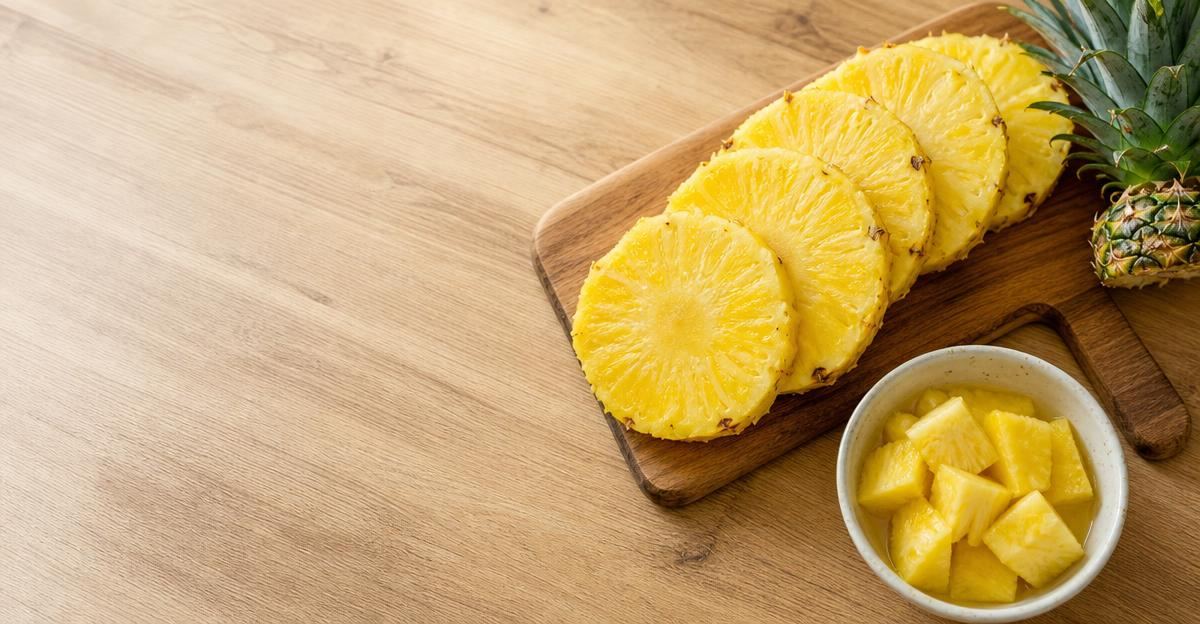
Pineapple adds vibrant sweetness to smoothies, yogurt bowls, and savory stir-fries. When building a consistent habit around logging what you eat, fruit is often one of the easiest whole foods to enjoy. Still, standing in the grocery aisle or preparing lunch at home brings up a practical question: how do fresh and canned pineapple differ when it comes to calories, carbohydrates, and micronutrients?
Understanding these differences helps you make informed choices that fit your daily nutrition goals without overthinking your grocery cart. Here is how fresh and canned pineapple compare nutritionally, how processing changes the fruit, and how to track both accurately.
The Baseline: Nutritional Profile of Fresh Pineapple
Raw pineapple is nutrient-dense, naturally hydrating, and relatively low in energy density. A standard one-cup serving of fresh pineapple chunks (approximately 165 grams) provides:
- Calories: ~82 kcal
- Carbohydrates: ~22 grams
- Dietary Fiber: ~2.3 grams
- Natural Sugars: ~16 grams
- Protein: ~0.9 grams
- Fat: ~0.2 grams
- Vitamin C: ~79 mg (nearly a full day's recommended intake)
- Manganese: ~1.5 mg (over half of your daily requirement)
Beyond basic macronutrients, fresh pineapple contains bromelain, a mixture of enzymes that digest protein. Bromelain has been studied for its potential role in reducing exercise-induced inflammation and supporting digestive comfort. Because fresh pineapple has a high water content (roughly 86 percent), it provides volume and satiety for a modest calorie count.
What Happens When Pineapple Is Canned?
Canning preserves fruit so it remains shelf-stable for months or years. The canning process involves cutting, packing, sealing, and heat-treating the fruit to destroy microorganisms and deactivate enzymes.
While canning locks in basic carbohydrates, fiber, and many minerals, the heat and packing liquid introduce two key changes:
1. The Impact of Packing Liquid
Canned pineapple comes packed in three common liquids: heavy syrup, light syrup, or 100% pineapple juice (or water).
- Canned in heavy or light syrup: Added sugars dramatically increase the energy density. A single cup of pineapple canned in heavy syrup can easily reach 180 to 200 calories and over 40 grams of sugar, more than double the caloric footprint of fresh fruit.
- Canned in its own juice: This option is much closer to fresh fruit, averaging around 130 to 140 calories per cup if you consume the liquid. If you drain the juice thoroughly, the calorie count drops closer to 90 to 100 calories per cup of solid chunks.
- Canned in water: The closest direct equivalent to fresh pineapple in calories, yielding roughly 75 to 85 calories per cup.
To evaluate accurate baseline data across whole and processed foods, checking the USDA FoodData Central database gives clear breakdowns of how canning liquids alter standard serving sizes.
2. Heat Sensitivity and Enzyme Activity
Vitamin C is heat-sensitive and water-soluble. Heat processing during canning can degrade roughly 20 to 40 percent of the original vitamin C content. Additionally, the heat deactivates bromelain entirely. While you still get essential carbohydrates, dietary fiber, potassium, and manganese from canned pineapple, you will not get active digestive enzymes.
Practical Comparison: Fresh vs. Canned
| Metric (Per 1 Cup Chunks) | Fresh Pineapple | Canned in 100% Juice (Drained) | Canned in Heavy Syrup |
|---|---|---|---|
| Calories | ~82 kcal | ~95 kcal | ~195 kcal |
| Total Carbs | ~22 g | ~25 g | ~50 g |
| Added Sugars | 0 g | 0 g | ~25–30 g |
| Fiber | ~2.3 g | ~1.8 g | ~1.8 g |
| Vitamin C | High (~79 mg) | Moderate (~20–30 mg) | Moderate (~20–30 mg) |
| Active Bromelain | Yes | No | No |
If your primary goal is managing overall caloric intake or stabilizing blood sugar, fresh pineapple or canned fruit packed in water or juice offers the best balance of sweetness and satiety. If you are managing specific metabolic conditions like prediabetes, it is always a good practice to speak with a registered dietitian or personal clinician about portion timing.
How to Log Pineapple Accurately
When logging fruit in your daily tracking routine, precision depends on being honest about liquid volume and added sweeteners.
- Check the label description: If you are using canned pineapple, distinguish between "chunks in water," "chunks in juice," and "chunks in syrup." A generic database entry for "pineapple" often defaults to fresh raw fruit, which can cause you to unintentionally undercount calories if your pantry version is packed in syrup.
- Account for draining: If you pour off the packing juice rather than drinking it, log your portion as "drained solids." If you pour the entire can into a blender for a smoothie, log both the fruit and the juice.
- Use photographic logging for quick recognition: Cutting fresh pineapple yields irregular chunks that can be annoying to measure precisely with cups. Learning how accurate is AI calorie tracking can help you decide when a fast photo log of your fruit bowl is sufficient compared to weighing on a digital kitchen scale.
- Mind portion sizes when managing health goals: For general health management, pairing pineapple with a protein source—such as Greek yogurt or cottage cheese—blunts rapid blood sugar spikes and keeps you satisfied longer. Those coordinating meals alongside medical nutrition therapy can explore supportive resources at medical.life for structured clinical support.
Which Should You Choose?
Both fresh and canned pineapple deserve a place in a healthy diet.
Choose fresh pineapple when you want maximum vitamin C, active bromelain, crisp texture, and the lowest natural calorie density. It works best eaten raw as a snack, tossed into fresh salads, or grilled over high heat.
Choose canned pineapple (ideally packed in water or 100% juice) for convenience, budget-friendly meal prep, and long shelf life. It is ideal for cooked sauces, baked recipes, slow-cooker curries, or keeping on hand when fresh fruit is out of season.
Building sustainable nutrition habits is not about eliminating convenient pantry staples; it is about knowing how they fit into your day. To keep your daily nutrition, training, and body composition on track without friction, use Stride to log meals, workouts, and weight in one place.
Put this into practice with Stride
Log meals, training, weight and sleep in seconds, then get guidance that fits your own numbers.
Try Stride free