
Omega-3 Fats by Portion: A Practical Guide
Learn how to measure omega-3 fats by portion size from salmon, sardines, walnuts, and seeds to support your daily nutrition goals.
· 3 min read
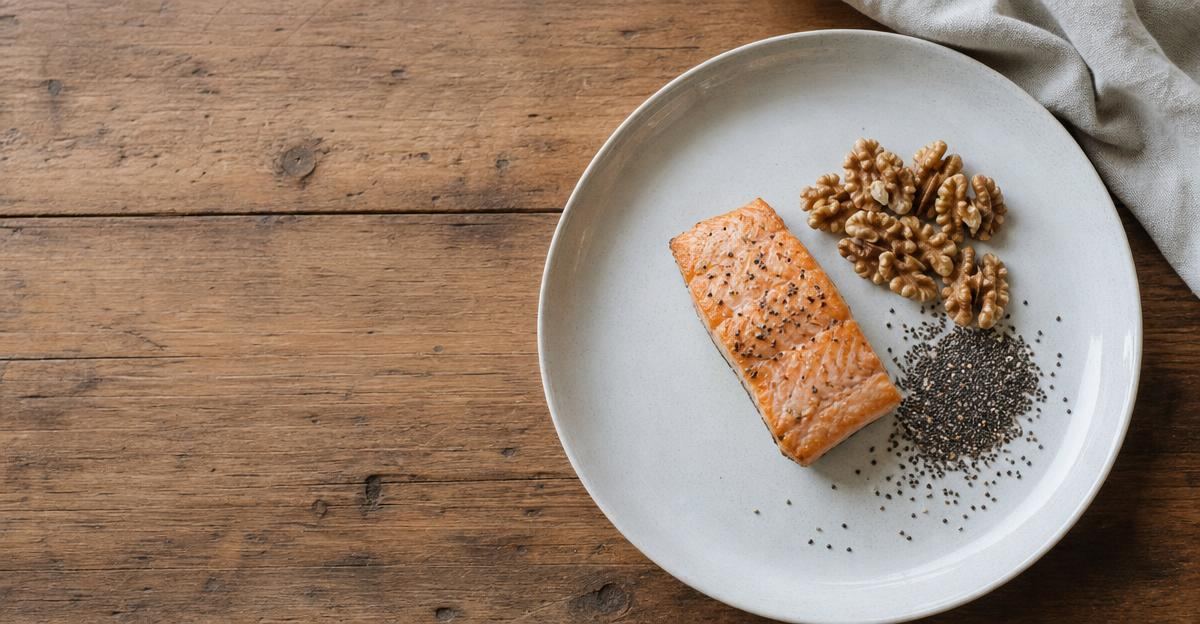
Omega-3 fatty acids are among the most researched nutrients in modern nutrition, yet they remain some of the hardest to gauge on a standard plate. While we often track macros like total protein, carbohydrates, and dietary fats, the specific quality of those fats plays a distinct role in cellular health, cardiovascular function, and joint recovery.
Getting enough omega-3s does not require precise laboratory measurements at every meal. Instead, understanding the primary food sources and their typical portion sizes can help you build steady, sustainable dietary habits.
The Three Main Omega-3s: ALA, EPA, and DHA
When looking at omega-3 fats, it helps to understand that they are not all identical. The three main forms found in human diets include:
- ALA (Alpha-linolenic acid): An essential plant-based fat found in flaxseeds, chia seeds, walnuts, and hemp seeds. The body must convert ALA into active forms, though the conversion rate is relatively low.
- EPA (Eicosapentaenoic acid): A marine-based fatty acid found in cold-water fish and algae, known for supporting cardiovascular and inflammatory pathways.
- DHA (Docosahexaenoic acid): Another marine fatty acid essential for brain structure, eye health, and nerve function.
According to the National Institutes of Health omega-3 fact sheet, while our bodies can convert small amounts of ALA into EPA and DHA, relying primarily on marine sources or targeted plant alternatives provides the most direct intake of active long-chain fats.
Marine Sources: Estimating Portions and Yields
Cold-water, fatty fish offer the richest concentration of EPA and DHA. When estimating your intake, standard cooked serving sizes provide a reliable baseline.
Wild and Farmed Salmon
A standard 3-to-4-ounce cooked fillet (roughly the size of a deck of cards) provides between 1,200 and 1,800 milligrams of combined EPA and DHA. While wild salmon generally contains slightly lower total fat than farmed varieties, both deliver substantial amounts of omega-3s per serving.
Canned Sardines and Mackerel
Small oily fish are dense in nutrients, convenient to store, and naturally low in environmental contaminants. A standard 3.75-ounce tin of sardines packed in olive oil or water delivers roughly 1,000 to 1,500 milligrams of EPA and DHA. A similar portion of Atlantic mackerel offers close to 1,000 milligrams.
Canned Tuna: Albacore vs. Light
Portion quality varies significantly between tuna species. A 3-ounce serving of canned white (albacore) tuna contains roughly 700 to 800 milligrams of omega-3s, whereas standard canned light tuna typically yields around 200 to 300 milligrams per serving.
If you are already tracking your protein, you can review our guide on 5 mistakes when tracking protein on a busy schedule to see how pairing oily fish into quick lunches can meet both goals simultaneously.
Plant-Based Omega-3 Portions (ALA)
For those following a vegetarian or plant-forward dietary pattern, whole plant foods offer concentrated sources of ALA.
Chia Seeds and Ground Flaxseed
A simple 1-tablespoon serving of chia seeds delivers approximately 2,500 milligrams of ALA. A 1-tablespoon portion of ground flaxseed provides around 1,600 milligrams. Note that whole flaxseeds often pass through the digestive tract intact, so ground flax is preferred for nutrient absorption.
English Walnuts
A standard 1-ounce handful of English walnuts (about 14 halves) contains roughly 2,500 milligrams of ALA, alongside fiber and micronutrients.
Algal Oil
For those who do not consume fish but want pre-formed DHA and EPA, algal oil supplements provide a direct plant-derived source. Many standard algal softgels supply 300 to 500 milligrams of combined DHA and EPA per serving.
Building a Consistent Weekly Routine
You do not need to consume high-dose omega-3s at every meal to maintain adequate tissue levels. Nutrition guidelines generally recommend eating two 3-to-4-ounce servings of fatty fish per week, or integrating daily tablespoons of ALA-rich seeds into oats, yogurt, or salads.
If you manage ongoing medical conditions or take blood-thinning medications, note that this is general nutrition information and you should speak with a primary physician or coordinate through a resource like medical.life before starting high-dose supplemental regimens.
Keeping Nutrition Tracking Simple
Tracking individual fatty acids down to the milligram can quickly lead to tracking burnout. A more practical approach is keeping tabs on your broader meal patterns, noticing how often oily fish or nutrient-dense seeds appear across your week.
Stride makes it easy to monitor your overall nutrition without unnecessary friction. By capturing photos of your meals, logging your daily activity, and keeping an eye on your sleep and recovery markers, Stride helps you maintain balance across all areas of your health. Try Stride to log meals, workouts, and weight in one place.
Put this into practice with Stride
Log meals, training, weight and sleep in seconds, then get guidance that fits your own numbers.
Try Stride free