
Logging Butter and Pan Sprays: What Actually Matters
Learn how to accurately log butter, oils, and non-stick cooking sprays without underestimating calories or making meal prep complicated.
· 4 min read
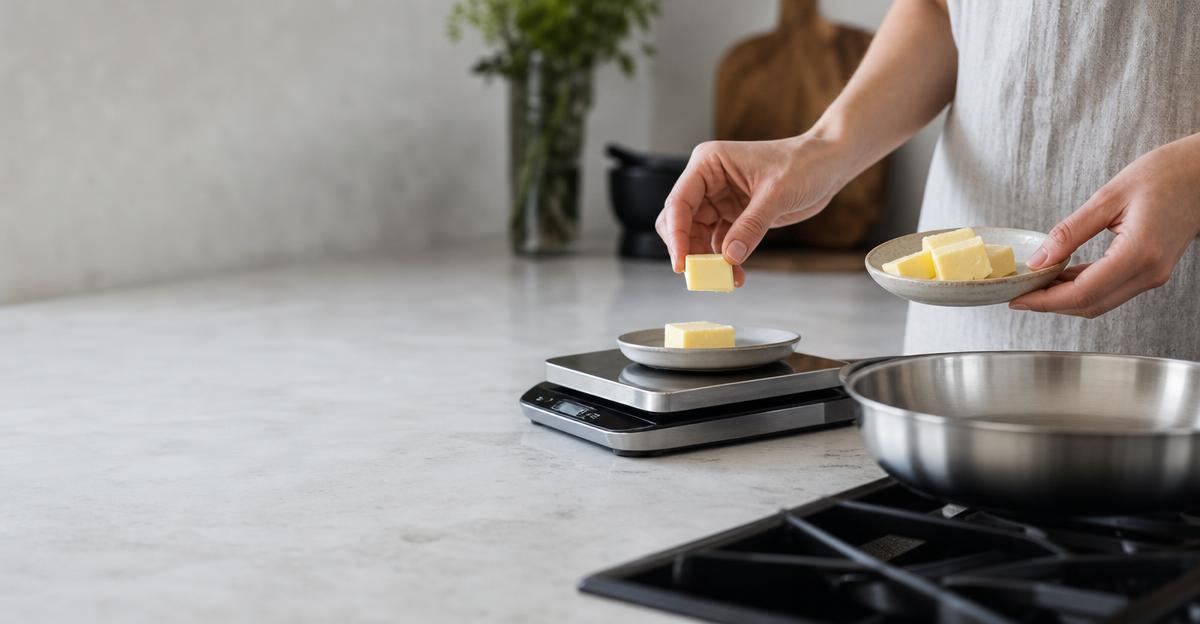
When cooking at home, cooking fats represent one of the easiest ways to accidentally miscalculate your daily energy intake. A splash of oil in a skillet, a quick swipe of butter on toast, or a heavy mist from an aerosol can might seem negligible in the moment. Yet fat is the most energy-dense macronutrient, delivering nine calories per gram compared to four calories per gram for carbohydrates and protein.
Small measurement discrepancies with cooking fats can add up to hundreds of unaccounted calories over a week. Learning how to log butter and cooking sprays with precision—without turning your kitchen routine into an exhausting chore—helps you maintain an honest picture of your daily nutrition. Note that this article is for general informational purposes; if you have specific dietary needs, speak with a registered dietitian or clinical provider.
The Reality of Cooking Sprays: Zero Calorie Myths
Non-stick cooking sprays frequently market themselves as "zero-calorie" alternatives to butter or bottled oil. Under standard labeling regulations, food manufacturers can display zero calories if a single serving contains less than 0.5 calories.
To achieve this label claim, the serving size on an aerosol spray can is often set to a fraction of a second—typically a 1/4-second or 1/3-second burst. In reality, most people hold down the nozzle for two to three full seconds to coat a frying pan or baking dish.
A standard aerosol spray is almost entirely pure oil (often canola, olive, or vegetable oil) mixed with an emulsifier and propellant. A two-second spray can deliver 2 to 3 grams of pure fat, yielding roughly 15 to 25 calories. If you cook two or three meals a day using generous sprays, you may be consuming 50 to 75 unrecorded calories daily.
To log sprays accurately without overthinking:
- Use a conservative default: If you give your pan a standard 1- to 2-second coat, log 1/2 teaspoon of cooking oil (around 20 calories and 2 grams of fat).
- Weigh the can: If you want exact precision for baking or high-volume cooking, place the can on a digital scale, tare it to zero, spray your pan, and place the can back on the scale. The negative number displayed in grams is the exact weight of oil you used.
Butter: Why Eyeballing Often Fails
Butter adds rich flavor and texture, but it is exceptionally dense. According to standardized food composition data from the USDA, a single level tablespoon of standard unsalted butter contains roughly 102 calories and nearly 12 grams of fat.
When people slice butter directly from a block or tub without measuring, they routinely underestimate their portion by 50% or more. A "pat" of butter scooped with a table knife often weighs 15 to 20 grams rather than the standard 5 to 7 grams people assume.
To capture butter accurately in your logs:
- Use tablespoon measurement wrappers: Standard stick butter wrappers in the United States feature tablespoon markings. While not perfectly precise down to the milligram, slicing along these lines provides a reliable estimate for most everyday cooking.
- Weigh the dish or container: If using soft butter or ghee from a tub, place the container on a food scale, press tare, scoop your portion, and read the negative weight in grams.
- Account for pan residue: If you melt a tablespoon of butter to sear chicken and half the butter remains in the skillet after plating, you do not necessarily absorb every drop. However, the most consistent approach is to log the full amount used in preparation. This builds a slight buffer rather than introducing underreporting errors.
Practical Strategies for Everyday Cooking
Accurate tracking should not make meal preparation stressful. Much like learning how to track multi-ingredient home-cooked meals fast, the goal with cooking fats is sustainable consistency rather than perfection.
Here are three practical ways to manage cooking fats without friction:
- Invest in an oil mister: Refillable pump misters let you use standard olive or avocado oil while controlling volume. Because you pump manual pressure rather than relying on chemical propellants, the output per second is predictable.
- Measure before heating: Avoid pouring oil or tossing butter directly into a hot pan from the bottle or wrapper. Measure with a teaspoon or digital scale first so you know the exact volume before heat changes the liquid's flow.
- Log the cooking method: If you roast vegetables tossed in two tablespoons of olive oil across four servings, divide the total fat evenly across each portion.
Managing personal health routines requires building reliable habits in the kitchen and beyond. When looking at long-term wellness, family support and structured routines go hand in hand, a topic explored in depth when evaluating When Transportation Matters for home-based independence.
Finding the Balance Between Precision and Sustainability
You do not need to stress over every microscopic drop of oil on a skillet. If your weight and fitness trends are progressing as planned, small approximations are perfectly fine. But if your progress has stalled and your energy intake seems lower on paper than your results reflect, cooking fats are the first place to audit.
Tracking your food, daily activity, and recovery metrics together gives you clear visibility into how everyday choices impact your results. Try Stride to log meals, workouts, and weight in one place.
Put this into practice with Stride
Log meals, training, weight and sleep in seconds, then get guidance that fits your own numbers.
Try Stride free