
How to Track Mixed Dishes Like Casseroles and Soups
Learn how to accurately track mixed dishes like soups, stews, and casseroles without overcomplicating your meal logging routine.
· 4 min read
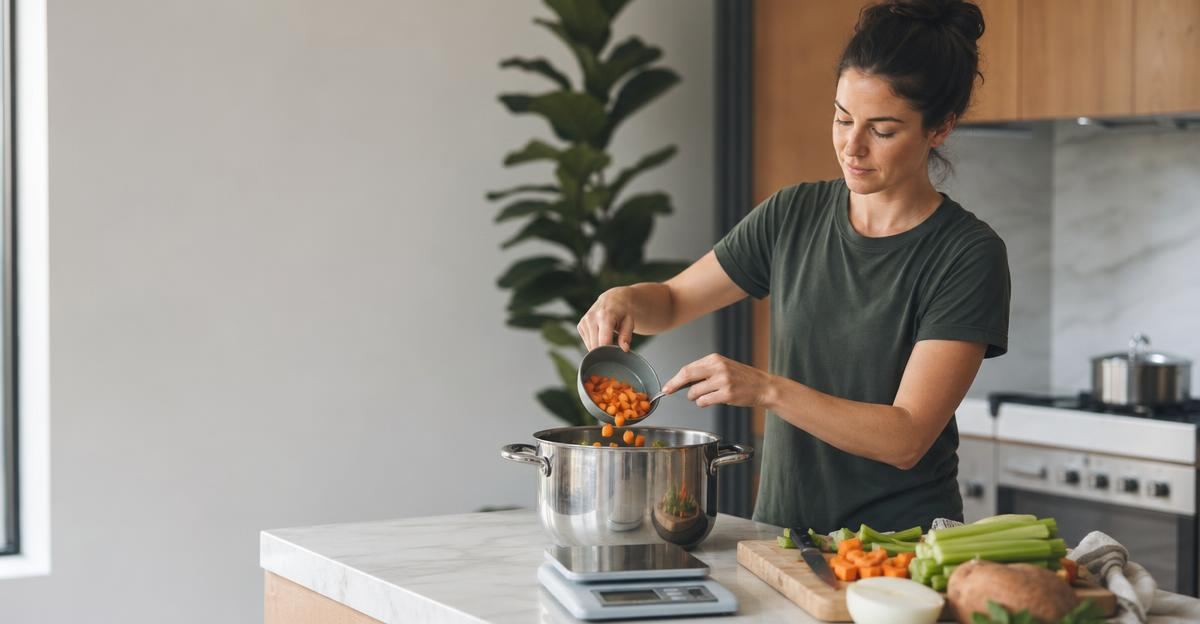
Logging single-ingredient foods is straightforward. A baked chicken breast, a cup of white rice, or a raw apple can be weighed or measured in seconds. But when dinner is a homemade chicken pot pie, a slow-cooked beef stew, or a layered lasagna, tracking nutrition can suddenly feel overwhelming.
Mixed dishes present a unique tracking puzzle: ingredients change volume during cooking, liquids evaporate, and spooning out a single portion means you are getting an unpredictable mix of meat, starch, and vegetables. Fortunately, you do not need a culinary science degree to log one-pot meals accurately. With a few clear strategies, you can keep your nutrition logs reliable without spending your evening doing complex math.
The Total Batch Method: The Gold Standard for Home Cooks
If you are cooking a large mixed dish at home, the most precise way to track it is by logging the entire recipe once and dividing it by weight or serving count.
When you prepare a stew, chili, or casserole, follow this straightforward workflow:
- Log raw ingredients as you prep: Weigh or measure the primary components before they go into the pot (e.g., olive oil, ground turkey, beans, broth, and vegetables).
- Weigh the final cooked dish: Place your serving dish or entire pot onto a food scale (subtracting the tare weight of the pot). Let’s say a finished chicken noodle soup weighs 2,000 grams.
- Set the recipe yield in your app: Enter the total weight (2,000 grams) as the recipe yield. When you ladle out a 400-gram bowl for dinner, log your serving as 400 grams.
This method completely removes the guesswork caused by water loss. As liquids simmer and evaporate, the caloric density increases even though the actual food mass shrinks. Using total batch weights keeps your numbers grounded in reality. If you want to streamline this workflow further, learning how to track multi-ingredient home-cooked meals fast can help you set up recurring recipe templates that save time every week.
Handling the "Uneven Spoon" Problem
A common concern with stews and casseroles is distribution. What if your first bowl of chili contains mostly beef and beans, while your second bowl contains mostly broth and diced tomatoes?
Over the course of several meals, these small variations naturally balance out. If you eat the entire batch over three or four days, you consume 100% of the logged ingredients regardless of minor bowl-to-bowl discrepancies. Even if you freeze half or share the dish with family, the overall caloric variance per meal is generally small enough that it will not derail your weekly targets.
Consistency in logging matters far more than forensic perfection on any single spoonful. The USDA FoodData Central database provides standardized nutrient profiles for thousands of mixed recipes, demonstrating that standard preparation methods generally fall within predictable nutritional ranges.
Estimating Mixed Dishes When You Didn't Cook
You will not always have access to the raw ingredient weights. When eating at a gathering, ordering takeout, or enjoying a meal prepared by someone else, use the "deconstruction method."
Look at the portion on your plate or in your bowl and estimate its foundation:
- Identify the primary protein: Estimate the cooked meat, tofu, or legume volume (e.g., roughly 4 to 6 ounces of chicken in a curry).
- Identify the carbohydrate base: Estimate the noodles, potatoes, or rice (e.g., 1 cup of cooked pasta in a baked ziti).
- Estimate the sauce and cooking fat: Look closely at the sheen and richness of the dish. A cream- or oil-heavy sauce usually adds 1 to 2 tablespoons of fat (120 to 240 calories) per serving, whereas a clear broth or tomato-based sauce adds very little.
Logging these three or four estimated parts individually will get you remarkably close to the actual total.
Tracking Across Different Life Stages and Schedules
Tracking mixed dishes becomes especially relevant when cooking for a household or managing health across different life stages. When preparing comfort foods for older family members or balancing multi-generational dinners, simple one-pot meals are often a staple.
Just as families navigate long-term planning—explored in articles like What The Future Of Senior Living In Chatham Will Look Like—building manageable nutrition habits is an investment in long-term wellness. Keeping your tracking process low-stress ensures that home cooking remains a sustainable, enjoyable part of your everyday routine.
Three Practical Rules for Frictionless Logging
To keep mixed-dish tracking quick and stress-free, lean on these three practical rules:
- Watch the hidden fats: In soups and casseroles, the biggest calorie drivers are butter, cooking oil, heavy cream, and full-fat cheese. When building or estimating a recipe, prioritize accuracy on these high-density ingredients rather than stressing over minor spices or low-calorie greens.
- Save your staples: If you cook a signature lentil soup or turkey shepherd's pie once a month, save it as a custom recipe in your app. The next time you make it, you only need to adjust the entry if you significantly alter the ingredients.
- Use visual benchmarks: When eating out, remember that a standard soup bowl holds about 1.5 to 2 cups of volume, a dense casserole portion is often the size of two decks of cards, and a standard ladle holds approximately half a cup.
Maintaining your health goals should never mean avoiding hearty, comforting meals. If you are managing a medical condition or have specific clinical dietary requirements, be sure to speak with a registered dietitian or physician for personalized guidance.
Ready to make nutrition tracking simple, whether you are eating a quick snack or a complex home-cooked casserole? Download Stride to log your meals, track your workouts, and monitor your weight trends all in one place.
Put this into practice with Stride
Log meals, training, weight and sleep in seconds, then get guidance that fits your own numbers.
Try Stride free