
How to Track Bone-In Meat Weights Without Overcounting
Learn how to track bone-in meat weights accurately using simple food scale methods and yield percentages so you never overcount calories or protein.
· 4 min read
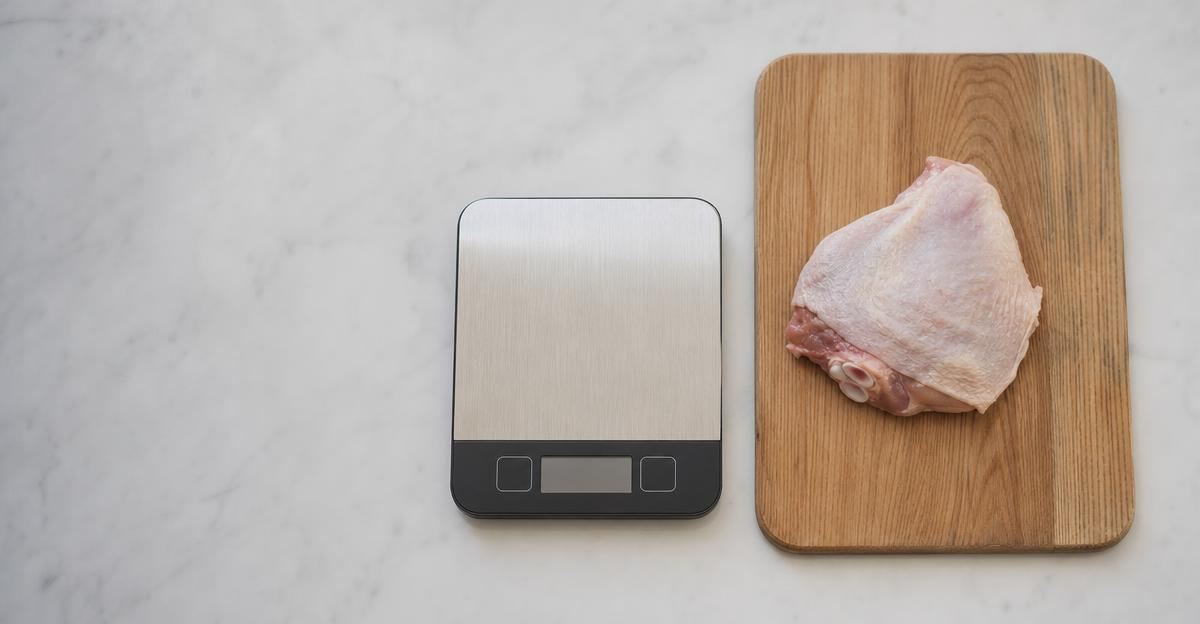
Placing a bone-in ribeye, a batch of chicken wings, or a pork chop on your kitchen scale can lead to immediate confusion. If the total weight reads twelve ounces, logging twelve ounces of meat will drastically overestimate your calories and protein. The bone makes up a significant portion of that total, yet you will not consume it.
Tracking your food accurately should give you clarity, not extra friction at dinner time. Overcounting bone-in cuts can lead you to believe you hit your protein target when you are actually falling short, or make you think your meal was far more calorie-dense than it truly was.
Fortunately, you do not need complicated math to handle bone-in cuts. Here is how to track bone-in meat weights accurately and keep your daily nutrition on target.
The Two-Weigh Method (The Gold Standard)
The most precise way to log bone-in meat involves two quick weigh-ins on your kitchen food scale.
- Weigh before eating: Place the cooked bone-in meat on your plate or scale and write down the starting weight (for example, 10 ounces).
- Eat your meal: Enjoy the meat, leaving the clean bones on your plate.
- Weigh the leftover bones: Place the remaining bones, cartilage, and inedible scraps back on the scale (for example, 3 ounces).
- Subtract the difference: Subtract the bone weight from the starting weight (10 oz – 3 oz = 7 oz). Log 7 ounces of cooked meat in your tracker.
This subtractive method takes less than twenty seconds. It works equally well whether you weigh the meat raw or cooked, as long as you match the preparation state in your database. If you weigh raw bone-in chicken before cooking and subtract the raw bones, log the result as raw meat. If you weigh cooked meat and subtract cooked bones, log it as cooked meat.
Standard Bone-to-Meat Yields for Quick Estimates
When you are dining out, eating with family, or simply do not want to re-weigh clean bones after dinner, standard yield percentages provide a reliable shortcut. The USDA FoodData Central database accounts for refuse percentages across different animal cuts, showing just how much non-edible weight standard cuts carry.
Here are general averages for common bone-in cuts:
- Chicken wings: About 40% to 50% bone and skin refuse. A 10-ounce basket of wings yields roughly 5 to 6 ounces of edible meat.
- Chicken thighs (bone-in, skin-on): About 25% to 30% bone. An 8-ounce raw thigh contains approximately 5.5 to 6 ounces of edible meat and skin.
- Chicken drumsticks: About 30% to 35% bone.
- Bone-in ribeye or T-bone steak: About 15% to 20% bone weight.
- Bone-in pork chops: About 15% to 20% bone weight.
- Pork or beef ribs: About 45% to 55% bone weight.
If you have an 8-ounce bone-in pork chop, multiplying the total weight by 0.8 gives you roughly 6.4 ounces of edible meat. While not down to the gram, this estimate prevents the massive overcounting that happens when logging the full 8 ounces.
Cooked vs. Raw: Matching Your Entry
Beyond the bone itself, moisture loss during cooking changes meat density. Raw meat loses roughly 20% to 25% of its weight in water during standard cooking methods like grilling, roasting, or pan-searing.
To keep your logs consistent:
- If logging as raw: Make sure your search entry specifies raw meat (e.g., "chicken breast, raw").
- If logging as cooked: Use a cooked entry (e.g., "chicken breast, roasted" or "grilled").
If you frequently make stews, braises, or large batch preps where bones are removed during cooking, learning how to track multi-ingredient home-cooked meals fast can save you from logging individual portions repeatedly.
Why Accurate Protein Tracking Matters
Protein provides the essential amino acids needed for muscle repair, immune function, and steady satiety throughout the day. When you mistakenly log the weight of a heavy beef bone as pure steak, your log might show 50 grams of protein when you only consumed 32 grams.
Over weeks or months, consistently under-eating protein while assuming you met your goal can affect recovery, energy levels, and body composition. Tracking protein accurately is especially critical when planning nutrition for older adults, who need adequate protein to preserve lean muscle mass. For those supporting aging family members, understanding Elderly Parent Weight Loss Weakness Meals highlights why actual protein intake matters for physical strength.
*(Note: Nutritional needs vary widely based on individual health history. This information is general education and not medical advice. Consult a registered dietitian or physician for personalized guidance.)*
Building a Low-Friction Habit
Precision should never come at the expense of consistency. If you have the scale handy, use the subtractive bone-weighing method. If you are eating out or pressed for time, use standard refuse percentages and move on with your day.
Tracking your food is a tool to give you clear feedback, not an obligation to achieve absolute perfection on every plate. The more seamlessly your logging fits into your actual lifestyle, the easier it is to maintain healthy habits across the year.
Tracking meals, strength sessions, and body metrics does not have to be complicated. Try Stride to log your meals, workouts, and weight in one intuitive place.
Put this into practice with Stride
Log meals, training, weight and sleep in seconds, then get guidance that fits your own numbers.
Try Stride free