
How to Set Up Habit Loops That Run on Autopilot
Learn how to build automatic habit loops using cues, low-friction routines, and rewards to make daily health tracking consistent and effortless.
· 4 min read
Building lasting health behaviors rarely comes down to sheer willpower. Most people have plenty of motivation on Monday morning, but by Thursday evening, decision fatigue sets in. When life gets busy, relying on conscious effort to remember every glass of water, workout, or medication dose almost always falls apart.
To make healthy behaviors stick, you need to turn them into automatic routines. A habit loop consists of three distinct parts: a cue (the trigger), a routine (the behavior), and a reward (the positive feedback). When these three elements connect reliably, your brain offloads the effort, allowing healthy patterns to run on autopilot.
The Anatomy of an Automatic Habit Loop
In behavioral science, habits form through repeated associative learning. According to research summarized by the National Institutes of Health, habits are formed when behaviors are repeatedly triggered by environmental context cues, eventually becoming automatic responses that require minimal mental bandwidth.
A functional loop relies on three steps:
- The Cue: An unmistakable prompt in your immediate environment or daily rhythm.
- The Routine: A small, clearly defined action you take immediately after the cue.
- The Reward: An immediate sense of completion, physical relief, or tracking feedback that tells your brain the action was worthwhile.
When designing health habits, the goal is to make the cue obvious, the routine frictionless, and the reward immediate.
Step 1: Anchor New Behaviors to Established Triggers
The easiest way to introduce a new health habit is not to pick a random time on the clock, but to anchor it to something you already do without thinking. Clock times are fragile; daily events are dependable.
Instead of saying, "I will drink a glass of water at 8:00 AM," anchor the habit: "When I turn off my morning alarm, I will drink the glass of water sitting on my nightstand."
You can use this approach across different areas of health:
- Nutrition: When I place my lunch plate on the table, I will take a quick photo to log my meal before picking up my fork.
- Mobility: When my morning coffee brews, I will do three minutes of calf and hamstring stretches.
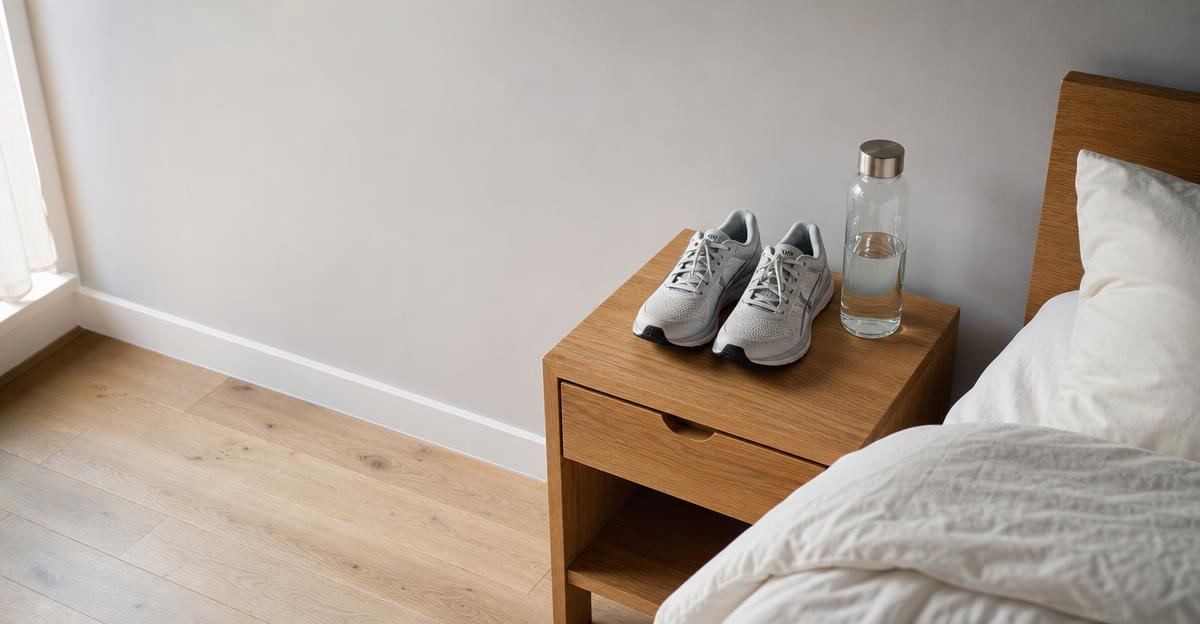
- Evening Routine: When I brush my teeth at night, I will set out my workout shoes next to the bed.
Establishing reliable triggers is also a central theme in long-term wellness and healthcare management, as explored in Breaking The Rehospitalization Loop, where predictable systems help individuals stay consistent with daily care plans.
Step 2: Lower the Friction for the Routine
When a habit fails to take hold, the routine is usually too demanding for your lowest-energy days. If your target routine requires ten steps to execute, any friction—like searching for gym clothes or typing complex recipe ingredients into a database—gives your brain an excuse to skip it.
To create true automaticity, reduce the steps needed to start:
- Pre-stage your environment: Keep your daily medications next to your water glass or coffee mug so you never have to search for the bottle.
- Simplify tracking: Rather than weighing and manually searching ten separate ingredients during a rushed lunch, take a photo to capture the meal instantly.
- Scale the minimum effort: Define a baseline version of the habit. If your plan is a 30-minute walk, your non-negotiable minimum on exhausting days might simply be putting on your shoes and walking around the block once.
Reducing the cognitive load around daily health management frees up energy for consistency. If you want to build a sustainable daily rhythm, learning how to track medications and daily habits together can help streamline your daily routines without feeling overwhelmed.
Step 3: Engineer Immediate Rewards
Your brain's habit center prioritizes immediate feedback over delayed outcomes. Long-term health goals, such as building cardiovascular stamina or achieving body recomposition, take months to show visible progress. If you rely solely on future results for reinforcement, your habit loop lacks an immediate reward.
To reinforce the loop today:
- Use visual completion: Checking off a task, seeing a step streak continue, or watching a log update provides an immediate micro-reward.
- Pair with existing pleasures: Only listen to your favorite podcast while doing your morning walk.
- Acknowledge the physical shift: Pause for five seconds after stretching or drinking water to notice the genuine physical relief or alertness in your body.
Protecting Your Loops When Routines Break
Life inevitably brings travel, illness, and unexpected schedule changes. A habit loop designed solely for perfect days will break during chaotic weeks.
When your routine faces disruptions, focus on preserving the cue-reward relationship even if you scale down the routine itself. If travel prevents you from doing your standard 45-minute gym session, keep the loop alive by doing five minutes of bodyweight squats in your hotel room at your usual workout time. Maintaining the neural connection between the trigger and the action is far more important than the intensity of a single session.
*Note: This article provides general lifestyle and behavioral information. For personalized clinical advice or guidance regarding medical regimens, speak with a qualified clinician.*
If you are looking for an effortless way to keep your daily routines on track, try Stride to log meals, workouts, and weight in one place.
Put this into practice with Stride
Log meals, training, weight and sleep in seconds, then get guidance that fits your own numbers.
Try Stride free