
How to Log Tacos, Wraps, and Compound Meals
Learn practical, stress-free ways to log compound meals like tacos, burritos, and wraps accurately without pulling your food apart.
· 4 min read
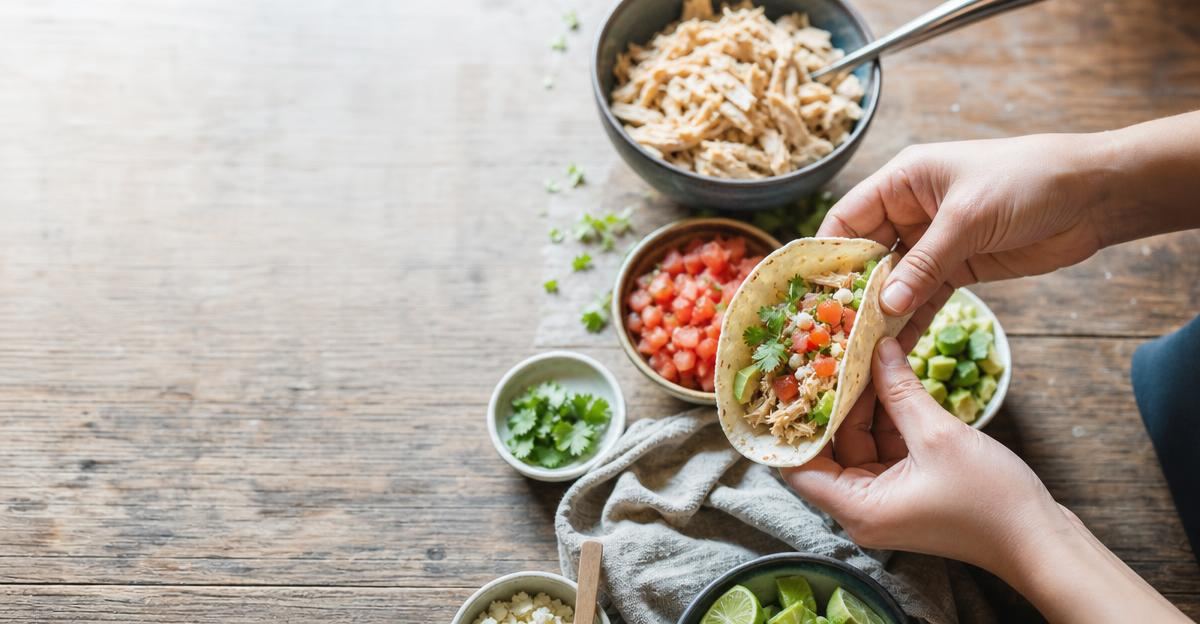
Compound meals are among the most satisfying foods to eat. A handheld breakfast burrito, three street tacos loaded with salsa and cilantro, or a Mediterranean chicken wrap pack distinct flavors and textures into every bite.
They are also the exact meals that make people want to abandon nutrition tracking entirely.
When your lunch consists of a single handheld item containing six different fillings, two sauces, and a tortilla, weighing every individual ingredient feels tedious. Fortunately, you do not need to pull apart your food to maintain an accurate nutrition log. With a few practical habits, you can log mixed dishes quickly and move on with your day.
Deconstruct the Meal into Three Core Anchors
Rather than worrying about every pinch of seasoning, break any compound meal down into three main elements: the base, the protein, and the heavy extras.
- The Base (Wrap or Shell): This is usually the easiest part to identify. A standard 8-inch flour tortilla has roughly 140 calories, whereas a large 12-inch burrito tortilla can easily reach 300 calories. Corn tortillas typically sit around 50 to 60 calories each.
- The Protein: Identify the primary filling. Is it grilled chicken breast, ground beef, carnitas, or black beans? A palm-sized portion is generally about 3 to 4 ounces.
- The Dense Fats and Sauces: This is where estimates often drift off course. Cheese, sour cream, guacamole, mayo-based sauces, and cooking oils carry significant energy density.
Vegetables like shredded lettuce, diced tomatoes, cilantro, onions, and basic salsas carry minimal caloric weight. Unless you are using a large volume of sugary dressings, you can keep your vegetable estimates quick and forgiving.
When you want to balance your overall diet, learning how to track multi-ingredient home-cooked meals fast keeps logging friction low so you stay consistent across months.
Use the "Rule of Halves" for Sauces and Spreads
Sauces often represent the largest variable in wraps and sandwiches. A standard tablespoon of mayonnaise contains around 90 calories and 10 grams of fat, while sour cream contains about 25 to 30 calories per tablespoon.
According to the USDA FoodData Central database, condiments and prepared dressings vary widely depending on whether they are oil-based, dairy-based, or vinegar-based.
If you did not make the food yourself, restaurant cooks are generally generous with dressings. A reliable guideline is to visualize a standard two-tablespoon serving (the size of a golf ball) for any visible, rich sauce. If the wrap tastes distinctly creamy throughout, log two full tablespoons of the primary dressing or aioli. If it is lightly dressed, log one tablespoon.
Smart Strategies for Restaurant Orders
Eating takeout or dining out introduces hidden oils from the griddle. Here is how to handle dining out without stress:
- Search by Generic Equivalents: If you order two fish tacos from a local food truck, avoid spending five minutes searching for that exact truck in a database. Pick a standard entry like "fish taco with cabbage and crema" and enter two servings.
- Account for the Cooking Medium: Most restaurant proteins and grilled tortillas are warmed on an oiled flat-top. Adding one teaspoon (about 40 calories) of olive or vegetable oil per item accounts for that invisible cooking fat without overcomplicating the entry.
- Snap a Photo First: If you are in a social setting or short on time, taking a quick photo lets you log the meal later when you have a quiet moment.
Nutrition tracking is fundamentally about patterns, not perfection. Over time, minor estimation errors smooth out across your weekly averages. Finding a simple way to streamline daily tasks—whether it involves your own wellness habits or supporting family routines—removes mental fatigue and keeps healthy habits sustainable.
Building Repeat Meals for Speed
Most people rotate through a handful of favorite lunches. If you make a turkey wrap four days a week for work, create it as a saved recipe or custom item in your tracking app once.
Measure the ingredients accurately the first time you assemble it:
- 1 whole wheat wrap
- 4 oz sliced turkey breast
- 1 oz provolone cheese
- 1 tbsp honey mustard
- Handful of baby spinach
Once saved, logging that lunch on a busy workday takes a single tap. If you swap turkey for tuna next week, you only need to change one line item rather than building the meal from scratch.
*Note: Nutrition estimates provide general guidance for habit building and energy balance. For personalized dietary advice or managing specific health conditions, consult a registered dietitian or medical professional.*
Stride makes logging complex meals effortless with photo recognition, custom recipe saving, and integrated health tracking. Try Stride to log your meals, workouts, and weight all in one place.
Put this into practice with Stride
Log meals, training, weight and sleep in seconds, then get guidance that fits your own numbers.
Try Stride free