
How to Log Stir-Fry When Veggies and Oils Mix
Learn how to log stir-fry meals accurately when oils, sauces, and mixed vegetables blend together. Practical estimation tips for home and takeout.
· 5 min read
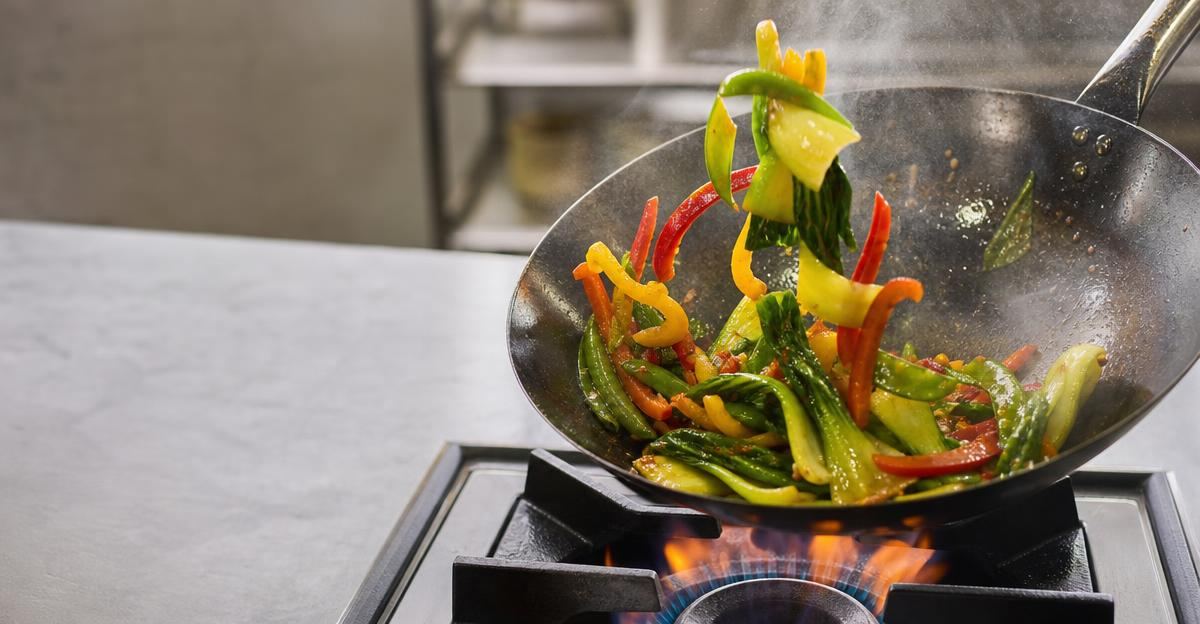
Stir-fries are a staple for anyone aiming to eat well. They are fast, rich in micronutrients, and an easy way to pack several servings of produce into a single skillet. But when it comes time to log your dinner, a wok full of mixed ingredients can feel like a puzzle.
Unlike a meal where chicken breast, roasted broccoli, and jasmine rice sit in neat, separate piles on your plate, a stir-fry blends everything together. Fibrous vegetables like broccoli, mushrooms, and snap peas act like sponges, soaking up cooking fats and savory sauces. If you pour two tablespoons of sesame oil into the pan, how much ended up on your plate versus left behind on the metal?
Tracking composite meals does not require tedious kitchen chemistry. With a few practical rules of thumb, you can account for hidden cooking fats and mixed produce without turning dinner prep into a math exam.
Why Stir-Fries Are Hard to Estimate
The primary challenge in logging a stir-fry is that liquid fats and sauces disperse unevenly. A single tablespoon of cooking oil contains roughly 120 calories and 14 grams of fat. When cooking at high heat, oil coats the wok, emulsifies with aromatics like garlic and ginger, and clings to the porous surfaces of chopped vegetables.
Because vegetables lose water as they cook down, their volume shrinks while their calorie density per cup increases. If you try to log two cups of raw bok choy versus two cups of cooked bok choy, the weight and energy yield will be noticeably different. Furthermore, high-surface-area vegetables—such as shredded cabbage or small broccoli florets—absorb significantly more sauce and oil than smooth proteins like sliced chicken breast or tofu.
You do not need to separate every carrot coin from your protein to stay accurate. Learning how to track multi-ingredient home-cooked meals fast allows you to capture your nutrition accurately while keeping dinner simple.
The Oil Absorption Problem: The 75 Percent Rule
When you cook at home, you have full control over what goes into the skillet. If you measure two tablespoons of peanut oil or avocado oil into the pan, you know the total ceiling of fat used. However, not every drop of oil makes it onto your plate. Some oil stays coated on the cooking surface, and some remains in the leftover sauce pooled at the bottom of the pan.
If you eat the entire pan yourself, log 100 percent of the oil you added. If you make a multi-serving batch, follow these simple steps:
- Log the raw cooking oil into the total recipe: Note down the exact amount of cooking fat used in the pan.
- Account for pan residue: If a visible layer of sauce and grease stays in the skillet after serving, standard kitchen guidelines suggest roughly 70 to 80 percent of the oil adheres to the food. You can safely log three-quarters of the measured fat for the batch.
- Divide by portions: Weigh the final batch or divide it visually into equal containers to log your individual serving.
For home cooks interested in checking standard fat and macronutrient profiles for oils, sauces, and raw produce, the USDA FoodData Central database provides comprehensive breakdowns for raw, cooked, and processed ingredients.
Step-by-Step: Logging a Homemade Stir-Fry
To get a dependable log without weighing every individual vegetable slice, use this streamlined workflow:
1. Measure the Heavy Hitters First
Calories in a stir-fry come predominantly from three components: the cooking oil, the protein, and any carbohydrate-dense additions (like noodles, rice, or thick cornstarch-based sauces). Measure your oil with a tablespoon rather than free-pouring from the bottle. Weigh your raw protein before cooking if possible, or note the package weight.
2. Group Your Vegetables
Instead of logging 30 grams of bell pepper, 40 grams of onions, and 25 grams of mushrooms separately, create a single entry for "mixed stir-fry vegetables" or log the dominant vegetable by weight. Non-starchy vegetables provide vital fiber and micronutrients, but minor variations in their exact weight will not meaningfully shift your daily energy intake.
3. Account for Sauces and Marinades
Soy sauce, tamari, and rice vinegar add negligible calories, though they do contribute sodium. However, hoisin sauce, oyster sauce, honey, brown sugar, sweet chili sauce, and peanut butter are calorie-dense. Always measure sauces containing sugars, starches, or nut pastes before adding them to your stir-fry.
4. Divide Your Servings Consistently
Once everything is cooked, you can place your serving bowl on a food scale to weigh your portion, or simply divide the skillet visually into equal halves or thirds. If your recipe yields four equal meal-prep containers, logging one-quarter of the total recipe takes only a few seconds.
If you are coordinating health tracking alongside specialized clinical plans or recovering from medical procedures, platforms like medical.life can help you connect with professional healthcare guidance tailored to your specific conditions.
How to Estimate Takeout Stir-Fry
Restaurant and takeout stir-fries present a different challenge because commercial kitchens often use far more oil and cornstarch slurry than home cooks do to achieve that glossy, restaurant-style finish.
When logging a restaurant stir-fry:
- Assume 1.5 to 2 tablespoons of oil per entrée: Unless you specifically requested a light-oil or steamed preparation, commercial woks use generous cooking fats to prevent sticking and transfer high heat quickly.
- Identify the protein base: A standard takeout portion usually contains between 5 and 7 ounces of cooked meat, poultry, or tofu.
- Check the sauce consistency: Thin, savory brown sauces contain modest calories from soy sauce, broth, and a small amount of sugar. Thick, glossy, or sweet sauces (like General Tso or sweet and sour) indicate added sugar and cornstarch, which should be logged as an extra 100 to 150 calories per serving.
- Leave excess sauce in the container: If your meal is swimming in sauce, use a slotted spoon or fork to transfer the solid ingredients to your plate. Leaving the pool of oil and sauce behind can save 150 to 300 calories without sacrificing flavor.
Keep It Simple and Stay Consistent
Tracking your food should support your life, not complicate it. You do not need absolute perfection down to the single drop of sesame oil to make steady progress toward your wellness goals. What matters most is developing consistent estimation habits that capture the major energy drivers of your meals day after day. Note that this information is intended for general educational purposes; speak with a registered dietitian or clinician for individualized dietary advice.
When you want to remove the friction from tracking complex, multi-ingredient meals, Stride makes it effortless. Try Stride to log meals, workouts, and weight in one place, using smart photo logging to break down mixed plates in seconds.
Put this into practice with Stride
Log meals, training, weight and sleep in seconds, then get guidance that fits your own numbers.
Try Stride free