
How to Log Stir-Fries and One-Pan Skillet Meals
Learn how to log stir-fries and one-pan skillet meals accurately. Master raw batching, sauce estimation, and easy shortcuts for mixed home-cooked dinners.
· 5 min read
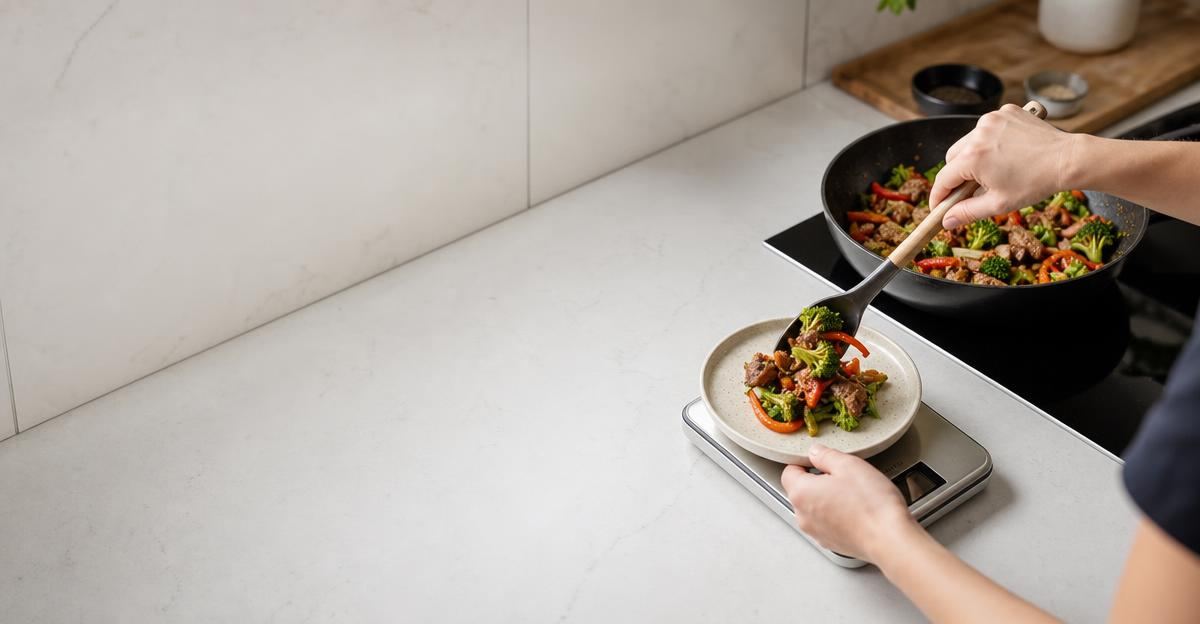
One-pan skillet meals and stir-fries are weeknight staples for good reason. They come together quickly, pack in lean proteins and crisp produce, and leave you with minimal cleanup. Yet when it comes time to log what you ate, these mixed dishes can feel like a tracking puzzle.
Unlike a plate with a distinct chicken breast, a scoop of brown rice, and steamed broccoli sitting side by side, a stir-fry blends everything into a single pan with cooking oils and sauces. Weighing each bite after it is cooked is nearly impossible, but you do not need to dismantle your dinner to stay consistent with your nutrition goals.
Here is how to log stir-fries and one-pan skillet meals accurately, quickly, and without taking the joy out of cooking.
Why Mixed Skillet Meals Feel Tricky
When you toss vegetables, protein, cooking oil, and sauce into a hot wok or cast-iron skillet, two things happen that complicate tracking: moisture evaporates and ingredients combine unevenly.
As water cooks out of mushrooms, onions, and meats, the raw weight of your ingredients shrinks, concentrating the calories per ounce. If you log 200 grams of cooked chicken using a raw chicken entry, your protein and calorie estimates will be off. Furthermore, sauces and cooking oils cling to some ingredients more than others. A piece of broccoli acts like a sponge for sesame oil and soy glaze, while lean chicken tenderloins might absorb much less.
Understanding these dynamics makes it easier to choose a reliable method that fits your routine rather than guessing wildly or abandoning your log altogether.
Method 1: The Raw Batch and Divide Approach
If you cook primarily for yourself or split a skillet evenly with a partner, the raw batch method offers the cleanest numbers.
Before you turn on the stove, weigh or measure your key energy-dense items raw: the cooking fats, proteins, grains, and sweet or oil-based sauces. High-volume, low-calorie vegetables like cabbage, bok choy, or zucchini can be estimated quickly or weighed together.
- Log the raw totals: Enter all raw ingredients into your tracker as a single combined recipe or meal entry.
- Cook your skillet: Prepare your stir-fry normally.
- Divide by portions: If you eat half the skillet tonight and save half for tomorrow's lunch, simply log 0.5 of the total batch. If you divide it into four equal storage containers, each meal is 0.25 of the recipe.
This simple math keeps your macro tracking precise because you capture every drop of oil and ounce of protein without needing to weigh each serving on a gram scale after cooking. If you often prepare family meals or batch recipes, learning how to track multi-ingredient home-cooked meals fast can save you hours over the course of a week.
Method 2: The Total Pan Weight Method
When a skillet meal serves people with different appetites—such as parents and growing children—equal fractions might not match what ends up on your plate. In this scenario, weighing the finished pan provides exact precision.
Here is how to do it:
- Weigh your empty skillet or wok before you start cooking, or keep a separate serving bowl on your counter and tare your scale to zero.
- Build your meal entry using the raw ingredients as you prep.
- Once the meal is fully cooked, weigh the entire finished dish in grams (subtracting the weight of the pan).
- Enter that total cooked weight as the number of servings in your recipe builder (for example, 1,200 grams equals 1,200 servings).
- Spoon your portion onto your plate, note its weight on the scale (say, 350 grams), and log 350 servings.
This method accounts for all moisture loss during high-heat searing while ensuring that your portion matches your actual intake.
Watch the Hidden Calories: Oils and Sauces
In stir-fries, the biggest tracking blind spots rarely come from the vegetables or meat; they come from the pan prep and the sauce bowl.
A single tablespoon of cooking oil contains around 120 calories and 14 grams of fat. When heating a dry wok, it is easy to free-pour oil directly from the bottle, inadvertently adding two or three tablespoons more than intended. Measuring your cooking oil with a spoon or setting the oil bottle on your scale and noting the negative weight before and after pouring keeps these estimates honest.
Sauces can also carry hidden energy. Sweet chili sauce, hoisin, teriyaki, and peanut sauces often contain substantial amounts of added sugars or fats. For detailed nutrient profiles of specific condiments and basic ingredients, you can cross-reference the USDA FoodData Central database to see how different bottled glazes compare.
If you want to keep calories moderate while maintaining deep flavor, lean heavily on aromatics that add negligible calories: fresh ginger, minced garlic, scallions, chili flakes, rice vinegar, and reduced-sodium soy sauce.
Visual Estimation When You Cannot Weigh
There will be nights when you do not want to use a kitchen scale, or you are eating a skillet dinner cooked by a friend or relative. When life is busy or you are coordinating family responsibilities—just as families research how to pick the right agency for your loved ones to streamline daily care routines—you need practical shortcuts that keep your momentum going.
When you cannot weigh, use visual landmarks:
- The Protein Core: Picture the palm of your hand for a standard 3 to 4-ounce serving of chicken, beef, or tofu. If your bowl has about two palm-sized amounts of meat scattered throughout, estimate 6 to 8 ounces of cooked protein.
- The Base: Use a fist to represent roughly one cup of cooked rice, noodles, or cauliflower rice.
- The Cooking Oil Buffer: Add one standard teaspoon (about 5 grams) or tablespoon (about 14 grams) of cooking oil as a baseline for home-cooked stir-fries to account for the pan coating.
This rule-of-thumb approach is not about perfection; it is about consistency. Tracking accurately enough to maintain your awareness is far better than skipping entries whenever a recipe feels complex.
*Note: Nutritional needs vary based on individual health goals and medical conditions. This guide provides general logging information and is not clinical nutrition advice. Consult a registered dietitian or physician for personalized dietary guidance.*
Build Long-Term Tracking Ease
Logging one-pan meals does not have to feel like a chore. Once you build two or three go-to skillet templates in your tracker, logging dinner takes less than thirty seconds. You can swap flank steak for shrimp, or bell peppers for sugar snap peas, without recalculating your entire recipe from scratch.
To make daily tracking even simpler, try Stride to log meals, workouts, and weight in one place. Stride lets you snap quick photos of your home cooking, track workouts, and monitor your weight trends seamlessly—giving you a clear, complete picture of your health without the friction.
Put this into practice with Stride
Log meals, training, weight and sleep in seconds, then get guidance that fits your own numbers.
Try Stride free