
How to Log Stews, Casseroles, and Soups Accurately
Learn how to log stews, casseroles, and soups accurately without stress. Practical tips for batch cooking, leftovers, and restaurant bowls.
· 4 min read
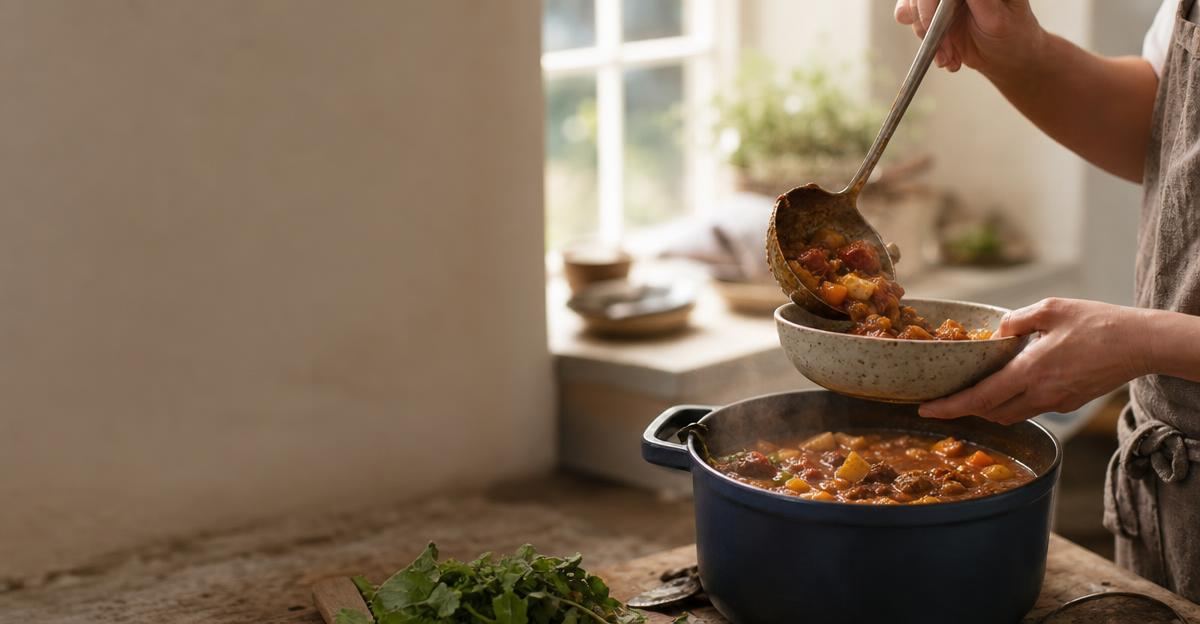
One-pot meals are staples of practical home cooking. A slow-cooked beef stew, a baked chicken casserole, or a pot of vegetable lentil soup makes weeknight dinners simple and generates reliable leftovers.
Yet when you sit down to log your food, these dishes often cause friction. Unlike a meal with separate portions of chicken breast, rice, and broccoli on a plate, a soup or casserole mixes liquids, fats, starches, and proteins together into an uneven blend. One ladle might hold mostly broth, while the next has three chunks of beef and extra potatoes.
Tracking mixed meals does not require weighing every individual carrot before it enters your bowl. With a few straightforward strategies, you can capture your nutritional intake accurately without turning dinner preparation into a chore.
Why Mixed Dishes Trip Up Food Logs
The main difficulty with soups and casseroles comes from moisture changes and distribution.
When you simmer a stew on the stove or bake a casserole in the oven, water evaporates. The total weight of the finished dish drops, but the total calories and macronutrients remain exactly what you put into the pot. If you try to log a cooked portion using raw ingredient weights without accounting for that moisture loss, your numbers will quickly drift off course.
Furthermore, commercial database entries for items like "beef stew" or "vegetable soup" rely on generic averages. A homemade chili made with extra-lean ground turkey, black beans, and diced tomatoes has a drastically different energy density than a restaurant chili made with high-fat beef and added oil. To understand baseline nutritional values for staple whole ingredients, consulting USDA FoodData Central can show you just how much fat and water content vary across cuts of meat and cooking bases.
The Recipe Method: Cook Once, Portion Easily
The most reliable way to handle home-cooked stews, soups, and casseroles is to calculate the total batch once, then divide it into servings.
Step 1: Weigh Your Key Ingredients Raw
Before cooking, jot down the weights of the calorie-dense components: cooking oils, meats, grains, legumes, dairy, and starchy vegetables. You do not need to obsess over low-calorie aromatics like garlic or celery, but you want clear numbers for the items that drive the meal's energy content. If you want a deeper look at streamlining this process for busy weeknights, our guide on how to track multi-ingredient home-cooked meals fast breaks down time-saving kitchen workflows.
Step 2: Choose Your Serving Strategy
Once the food is cooked, you have two practical options to divide it:
- Equal Portions: If you regularly pack meals into identical glass containers for the week, simply divide the entire batch evenly into four or six containers. Log each container as one fraction (for example, 1/4 or 1/6) of the total recipe.
- Total Cooked Weight: If your household serves out of the main pot over several days, place the finished pot on your kitchen scale (remembering to subtract the weight of the empty pot). If the finished stew weighs 1,600 grams, enter the recipe's total yield as 1,600 grams or 16 servings of 100 grams. When you scoop out a 350-gram bowl later, you simply log 3.5 servings.
Navigating Uneven Ladles and Leftovers
A common worry is that your first bowl of soup might have more meat than your second bowl tomorrow.
In practice, these minor distribution differences balance out across the days you consume the leftovers. Over the course of three or four days, you still consume the exact ingredients you logged in the total batch. Consistency over time matters far more than achieving perfect mathematical precision in a single lunch bowl.
For households managing specialized dietary needs, meal planning often connects with broader personal health support. If an older relative or family member relies on structured dietary oversight or home support, resources like carenavigator.life can help families coordinate daily routines and health logistics.
Handling Restaurant Soups and Takeout Stews
When you order a mixed dish at a restaurant or eat at a friend's house, you cannot weigh the raw ingredients. In those situations, guessing individual components leads to decision fatigue.
Instead, look for the defining anchor of the dish:
- Identify the base: Is the broth clear, tomato-based, or cream-heavy? Cream and coconut milk bases carry far higher energy density than vegetable broths.
- Estimate the protein: Look at the volume of meat, tofu, or seafood in the bowl. A standard deck-of-cards portion equals roughly 3 to 4 ounces of cooked protein.
- Estimate the starches: Note whether the bowl contains noodles, rice, dumplings, or potatoes, which usually account for a half-cup to a full cup per serving.
Select a representative database entry that matches those core traits, log it, and move on with your day.
*Note: This article provides general nutritional tracking education. If you are managing a medical condition that requires strict dietary oversight, such as kidney disease or diabetes, speak directly with your physician or a registered dietitian.*
Keep Your Meal Tracking Seamless
Tracking home-cooked stews, hearty casseroles, and seasonal soups should not add friction to your cooking routine. By logging the total batch or capturing meals visually, you can enjoy comforting home-cooked food while staying confident in your daily numbers.
To simplify your daily routine, use Stride to log meals, workouts, and weight in one place. Stride lets you snap quick photos of your meals, track your daily activity, and see your long-term health trends without extra complexity.
Put this into practice with Stride
Log meals, training, weight and sleep in seconds, then get guidance that fits your own numbers.
Try Stride free