
How to Log Homemade Stock Accurately
Learn how to accurately log homemade bone broth and vegetable stock without overcomplicating calories, protein, and fat.
· 5 min read
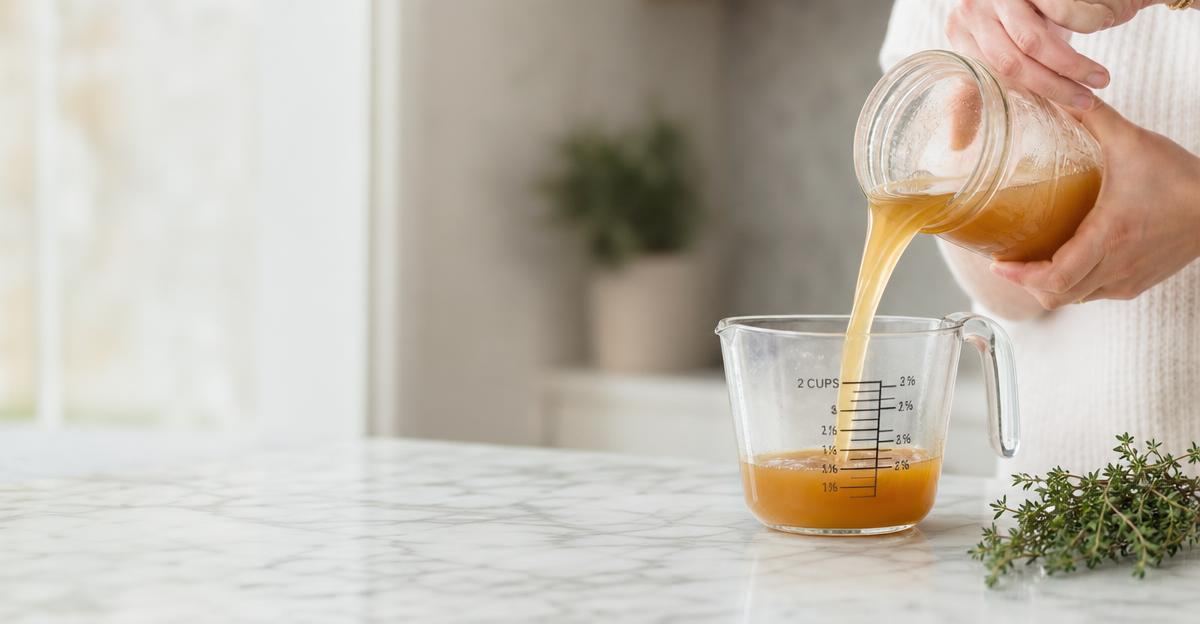
Simmering a large pot of bones, aromatics, and water on the stove fills the kitchen with incredible flavor. Making your own chicken, beef, or vegetable stock is economical, reduces kitchen waste, and gives home-cooked soups and sauces rich body.
Yet when you sit down to log your meals, homemade stock can feel like a nutrition puzzle. You put whole vegetables, herbs, and pounds of bones into water, simmered them for hours, and then strained almost all the solids out. How many calories ended up in the liquid? How much protein actually made it into the pot?
Logging homemade stock does not require laboratory testing or complicated kitchen math. Here is how to estimate your stock accurately without letting tracking slow you down.
What Actually Ends Up in the Liquid?
When you make stock, you extract water-soluble compounds, gelatin, minerals, and rendered fat from the ingredients into the water. The fibrous bulk of onions, celery, carrots, and spent meat stays behind in the strainer.
This means you cannot simply add up the raw weight of every ingredient tossed into the stockpot and divide by your yield. That method dramatically overcounts carbohydrates and fiber, while misjudging fat and protein.
Instead, the macronutrient profile of homemade stock depends almost entirely on two variables:
- Gelatin content (Protein): As connective tissue and collagen in animal bones break down under gentle heat, they convert into gelatin. Gelatin is nearly pure protein, providing roughly 4 calories per gram.
- Residual fat (Calories): Fat renders out of marrow, skin, and meat remnants. Fat contains 9 calories per gram and accounts for the largest calorie swings in any batch of broth.
For vegetable stocks, the math is even simpler. Strained vegetable broths yield tiny amounts of soluble sugars and trace minerals, generally landing under 15 to 20 calories per cup unless blended with pureed vegetables or heavy oils.
The Two-Step Method for Animal Stocks
To get an accurate number for chicken, turkey, or beef stock, follow a practical two-step process: remove the variable fat layer, then gauge the gelatin.
Step 1: Chill and Skim the Fat Cap
The easiest way to control both the flavor and the calorie density of your stock is to refrigerate it overnight. As the liquid cools, the rendered fat rises to the surface and solidifies into a firm, pale disc.
Lift or scrape this fat cap off before portioning your stock. Doing this removes the vast majority of extracted fat, transforming your stock into a naturally lean, high-protein base.
If you prefer to keep some fat for cooking, lift off the solid fat, weigh it on a kitchen scale, and log it separately as chicken fat (schmaltz) or beef tallow.
Step 2: Check the "Jiggle" (Gelatin Density)
Once the fat cap is removed, the remaining liquid is mostly water and gelatin. You can estimate its protein content simply by looking at how the chilled stock behaves:
- Liquid and runny when cold: If your stock stays completely fluid in the fridge, it contains minimal extracted collagen. It closely resembles commercial boxed broth, containing roughly 10 to 20 calories and 1 to 3 grams of protein per cup.
- Soft gel (wobbly like gelatin): If the chilled stock holds a gentle wobble when spooned, you extracted a moderate amount of collagen. Expect about 30 to 45 calories and 6 to 9 grams of protein per cup.
- Firm gel (holds its shape on a spoon): If you used collagen-rich cuts like chicken feet, wings, or beef knuckle bones and simmered them long enough, the chilled stock will set like firm gelatin. This concentrated broth contains roughly 50 to 80 calories and 10 to 15 grams of protein per cup.
You can verify these standard values by checking the USDA FoodData Central database entries for unsalted homemade bone broths and commercial stocks.
Using Standard Entries in Your Tracker
Instead of creating a custom recipe with dozens of raw ingredients that you ultimately discard, use generic verified entries in your food log.
Search for:
- "Stock, chicken, home-prepared" or "Bone broth, unsalted" for collagen-rich animal broths.
- "Broth, vegetable" for all-vegetable scrap stocks.
If your homemade stock forms a firm gel once chilled, choose an entry that shows around 8 to 10 grams of protein per 8-ounce cup. If it remains thin and watery, pick a lighter commercial broth equivalent with 2 to 3 grams of protein.
If you are balancing home-cooked preparations alongside other wellness goals like family meal planning or working with a carenavigator.life coordinator for dietary routines, keeping everyday logging rules simple prevents kitchen burnout. Learning how to track multi-ingredient home-cooked meals fast ensures you stay consistent without turning dinner prep into a math chore.
What About the Sodium?
One major benefit of homemade stock is sodium control. Store-bought broths often pack between 400 and 800 milligrams of sodium per cup unless specifically labeled low-sodium.
If you make your stock completely unsalted and season your dishes later, log your stock as "unsalted." If you add salt directly to the big batch, measure the total tablespoons added to the pot and divide by the number of quarts or cups produced. Note that while sodium does not alter calories, tracking it can be helpful for general cardiovascular and hydration awareness.
Practical Consistency Beats Perfection
A cup of homemade stock rarely exceeds a difference of 30 to 40 calories between a light simmer and a rich reduction, provided the surface fat has been skimmed. In the context of your overall weekly nutrition, that minor variation will not derail your progress.
Log an honest estimate based on how firm your chilled stock sets, account for any fat left in the liquid, and enjoy the rich, nourishing meals you cook from scratch.
To simplify your daily health routines, try Stride. Stride lets you log your home-cooked meals, workouts, weight trends, and daily wellness habits together in one clear, easy-to-use place.
Put this into practice with Stride
Log meals, training, weight and sleep in seconds, then get guidance that fits your own numbers.
Try Stride free