
How to Estimate Calories in Braised and Slow-Cooked Meats
Learn practical methods to estimate calories in braised and slow-cooked meats, account for rendered fat, and handle bone-in cuts accurately.
· 4 min read
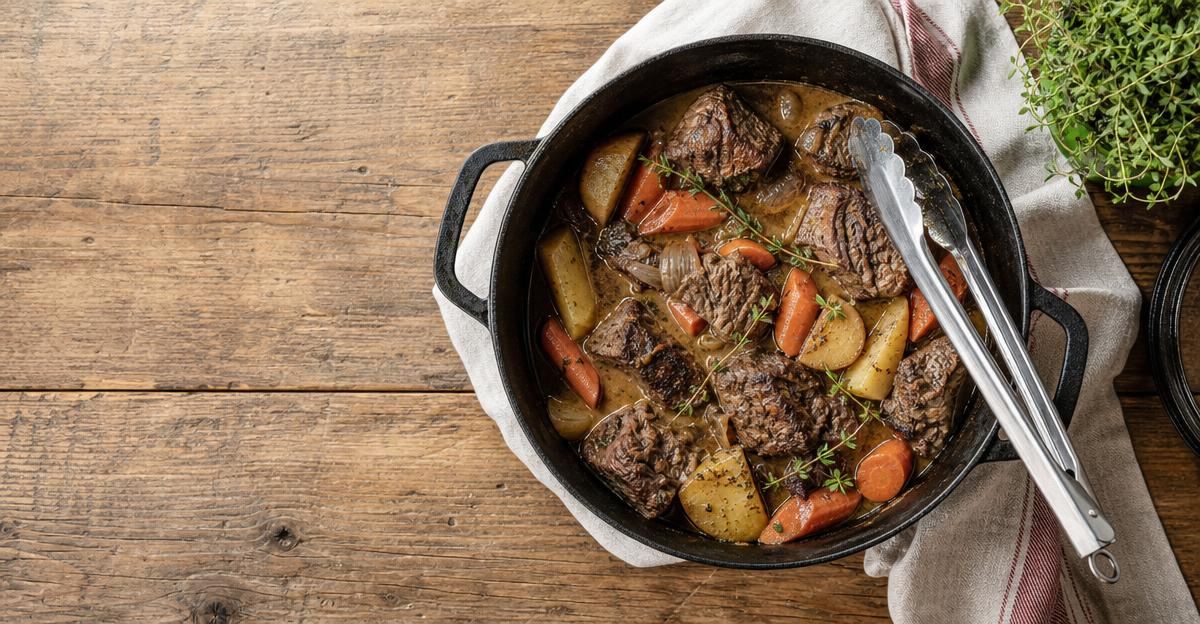
Slow cooking and braising turn tough, flavorful cuts of meat into tender, satisfying meals. Whether you make a beef chuck roast, pork carnitas, or braised chicken thighs, slow-cooked dishes are staples for meal prep.
However, estimating the calories in these dishes often feels complicated. As meat simmers for hours, connective tissues dissolve, moisture evaporates, and fat renders out into the cooking liquid. If you weigh the meat raw, the number changes drastically once it is cooked. If you weigh it cooked, the fat left behind in the pot makes raw nutrition labels inaccurate.
Fortunately, you do not need a laboratory to get a reliable estimate. With a few basic principles, you can log braised dishes accurately without overthinking dinner.
Why Braised Meat Changes Weight and Calories
When you cook a cut of meat low and slow, two major shifts occur:
- Water loss: Muscle fibers contract under heat and expel water. A cut of meat can lose 25% to 40% of its total weight in water during braising. This concentrates the remaining protein and fat, meaning 4 ounces of cooked pot roast contains significantly more calories than 4 ounces of raw chuck roast.
- Fat rendering: Intermuscular fat and connective collagen melt. Some of this fat stays coated on the meat fibers, but a significant portion renders out into the braising broth.
Because of this shift, using standard raw nutrition facts on a cooked portion will underestimate your calories, while logging cooked meat without accounting for rendered fat can lead to overestimation.
Method 1: The Raw Batch Method (Best for Meal Prep)
If you are cooking a large batch at home, the raw batch method is the most reliable approach. This follows the standard workflow for how to track multi-ingredient home-cooked meals fast by measuring ingredients before heat alters them.
- Weigh the raw meat: Weigh your raw cut of meat before it goes into the pot. Log this raw weight and its specific cut (for example, raw beef chuck roast, boneless).
- Log your cooking liquids and fats: Add the exact amounts of cooking oil, wine, broth, honey, or sauces you add to the pot.
- Determine portions after cooking: Once the dish finishes, divide the final yield into even servings. If the entire pot makes four equal meals, each serving represents exactly one-fourth of the raw recipe totals.
This method works well because the total calories in the pot remain constant, regardless of how much water evaporates during cooking.
Method 2: The Cooked Meat Standard (Best for Single Servings)
If you did not weigh the cut before cooking, or if you are eating braised meat prepared by someone else, estimate based on cooked entries.
When logging cooked braised meat, look up entries that specify "braised," "stewed," or "roasted, cooked." The USDA FoodData Central database accounts for moisture loss and fat rendering across standardized cooked cuts.
Here are general guidelines for common cooked braised cuts:
- Beef Chuck Roast (braised, lean and fat trimmed to 0”): Roughly 230 to 250 calories and 30 grams of protein per 4-ounce cooked serving.
- Pork Shoulder or Butt (braised/roasted, lean only): Roughly 210 to 230 calories and 28 grams of protein per 4-ounce cooked serving.
- Bone-In, Skinless Chicken Thighs (stewed/braised): Roughly 190 to 210 calories and 26 grams of protein per 4-ounce cooked serving (meat only).
If your meat still has visible, untrimmed exterior fat, increase the estimated calorie density by about 15% to 20% to account for the extra fat intake.
Accounting for the Braising Liquid
The sauce left in your slow cooker or Dutch oven holds significant flavor—and calories. How you handle the liquid changes your final tracking numbers.
If You Skim the Fat
If you refrigerate your braise overnight, the rendered animal fat solidifies at the surface. You can lift this fat cap off with a spoon and discard it.
Once the fat cap is removed, the remaining liquid is mostly gelatin-rich broth, water, aromatics, and dissolved collagen. A cup of this defatted braising jus typically contains only 40 to 80 calories, primarily from dissolved protein and vegetable sugars.
If You Spoon the Sauce Over the Meat
If you ladle the warm, unskimmed cooking liquid over your plate, you are consuming the rendered fat along with the broth.
To account for this accurately without separating the sauce, add 0.5 to 1 tablespoon of animal fat (about 60 to 120 calories) to your log per generous ladle of sauce.
If you manage a specific health condition like cardiovascular disease or diabetes, discussing your dietary fat and sodium intake with your doctor or through carenavigator.life can help you set appropriate daily nutrient targets. Nutrition information should serve as general guidance rather than medical advice.
What to Do with Bone-in Cuts
Short ribs, bone-in pork shoulder, and lamb shanks present an extra challenge: the weight of the bone.
Never log the total weight of a bone-in piece of cooked meat as pure meat. Bones often account for 25% to 40% of the cut's total weight.
To log accurately:
- Weigh your portion with the bone before eating.
- Enjoy your meal.
- Weigh the discarded bone and gristle afterward.
- Subtract the bone weight from the starting weight to find the net weight of the cooked meat you consumed.
Practical Consistency Over Absolute Perfection
Braised meats are naturally variable. One cut of beef chuck might have slightly more marbling than another, and cooking times change moisture content.
You do not need to stress over a 10% margin of error. As long as you consistently apply the same estimation method—whether tracking raw batch weights or using standardized cooked database entries—your daily trends will remain steady and useful.
If you want an effortless way to keep your nutrition, activity, and body weight organized, try Stride to log meals, workouts, and weight in one place.
Put this into practice with Stride
Log meals, training, weight and sleep in seconds, then get guidance that fits your own numbers.
Try Stride free