
How to Count Steps When Pushing a Stroller or Cart
Learn why wrist trackers miss steps while pushing a stroller or cart, and discover 4 easy fixes to accurately count your daily walking activity.
· 5 min read
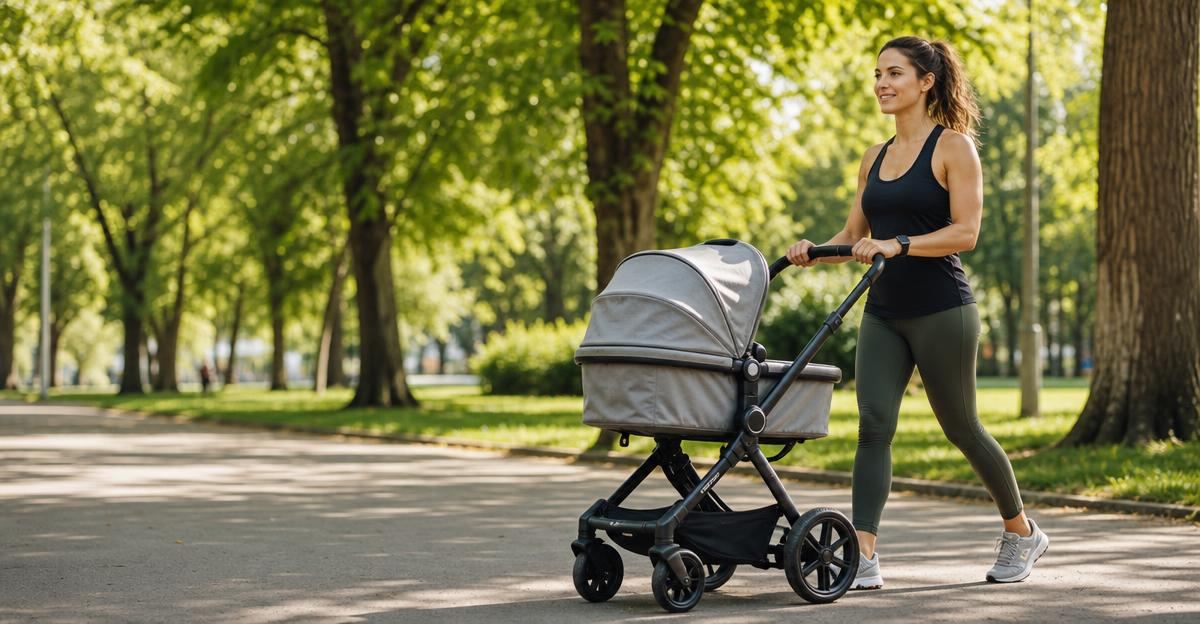
You just finished a forty-five-minute walk around your neighborhood pushing a stroller, or you spent an hour navigating the grocery aisles with a heavy cart. You check your wrist, expecting to see several thousand steps added toward your daily goal, only to find your tracker barely registered a few hundred.
It is a common frustration for parents, caregivers, and daily shoppers alike. Wrist-worn pedometers rely on the natural swing of your arm to calculate cadence and forward movement. When both hands grip a handlebar, your wrists remain nearly stationary. Your body is doing the physical work, but your device misses the signal.
Fortunately, you do not have to forfeit credit for your daily activity. With a few simple equipment adjustments and placement habits, you can capture every step accurately.
Why Wrist Trackers Miss Steps on Push Handles
Smartwatches and fitness bands contain three-axis accelerometers. These internal sensors measure changes in velocity along three planes: up and down, side to side, and forward to backward.
When you walk freely, your arms swing in opposition to your legs. This rhythmic swing creates distinct acceleration spikes that internal algorithms translate into steps. When you rest your hands on a stroller handlebar, lawnmower, or shopping cart, that swinging motion stops. Even though your legs are striding and your hips are moving, your wrists stay relatively flat and steady.
The vibration from rolling over pavement can sometimes register as random noise, but standard algorithms often filter out these vibrations to avoid falsely counting car rides. As a result, you might walk two miles while your smartwatch records almost nothing.
4 Practical Fixes for Accurate Tracking
You do not need specialized gear to solve this problem. Small changes in how you wear or carry your devices can ensure your daily movement gets logged properly.
1. Shift Your Device to Your Pocket
The simplest way to bypass wrist limitations is to move the sensor closer to your lower body. If you wear a tracker with a removable band, or if you use your smartphone as your primary pedometer, slipping the device into a front pants pocket solves the issue immediately.
Your thighs and hips experience continuous vertical and forward motion with every stride. Placing your phone or wearable in your pocket allows the accelerometer to detect the natural tilt and lift of your legs, capturing an accurate step count even when both hands remain glued to a cart handle.
2. Try an Ankle Strap or Belt Clip
If you prefer not to carry loose devices in your pockets, dedicated ankle bands or belt clips are effective alternatives. Many third-party makers design soft silicone or elastic straps that extend your wrist wearable so it fits securely around your ankle.
Ankle placement provides exceptionally clean step data because the sensor moves directly with your foot strikes. If you use a clip-on tracker, attaching it to your waistband near your hip bone offers similar precision without getting in the way of your clothing.
3. Practice the One-Handed Push
When terrain allows, pushing your stroller or lightweight cart with one hand frees your other arm to swing naturally. Alternating hands every ten minutes prevents muscle strain on one side of your upper back while keeping your tracker active.
Always prioritize safety over data collection. If you are pushing a heavy double stroller down a steep hill or maneuvering over rough, uneven pavement, keep both hands on the bar. Accurate step counts are helpful, but maintaining control of your cart or stroller comes first.
4. Rely on Phone Sensors or Dedicated Stroller Logs
Modern smartphones carry sophisticated motion coprocessors that track gait dynamics well when resting in a jacket or pants pocket. If you leave your watch on your wrist, checking your phone's built-in step counter can give you a more realistic estimate of your total movement for that outing.
You can also use this time as part of an active recovery routine rather than stressing over exact digit counts. If you are exploring how lower-intensity movement fits into your overall weekly training, reviewing our guide on walking for active recovery can help you balance daily steps with muscle repair.
The Physical Value of Stroller and Cart Walking
It helps to remember that pushing resistance actually demands more energy than standard walking. Moving a thirty-pound stroller with a growing toddler or navigating a loaded shopping cart engages your calves, hamstrings, glutes, and core to maintain forward momentum.
According to the Physical Activity Guidelines for Americans from health.gov, any moderate-intensity movement contributes directly to cardiovascular health, metabolic function, and overall well-being. Even if your wrist monitor fails to count every individual footfall, your cardiovascular system and muscles reap the full physiological benefits of the effort.
For family members supporting loved ones, caregiving routines often involve shared walks, pushing wheelchairs, and managing daily mobility tasks. Understanding practical care approaches, such as How We Respect Independence At Every Step, highlights how shared movement supports both caregiver wellness and recipient dignity.
Finding a Consistent Tracking Routine
Tracking physical activity should support your daily life rather than add unnecessary stress. To keep your records consistent across 2026, test these practical adjustments on your next few outings:
- Identify your route types: Use one-handed pushing on flat, smooth paths where you feel completely secure, and switch to pocket carry when navigating hills or rough sidewalks.
- Standardize your placement: If you find ankle or pocket tracking works best, make it a habit to move your device before heading out the door so you never have to guess.
- Focus on total time moving: If your steps do not register, track the duration of your walk. A brisk thirty-minute walk generally equals roughly 3,000 to 4,000 steps for most adults.
If you have specific cardiovascular concerns or joint limitations, speak with a physical therapist or clinician for personalized movement recommendations.
Building steady daily habits becomes much easier when all your health metrics connect in a single view. Try Stride to log meals, workouts, and weight in one place.
Put this into practice with Stride
Log meals, training, weight and sleep in seconds, then get guidance that fits your own numbers.
Try Stride free