
Free Home Workout Apps That Need No Equipment
Discover the best free home workout apps that require no equipment. Learn how to progress bodyweight exercises and build a lasting routine at home.
· 4 min read
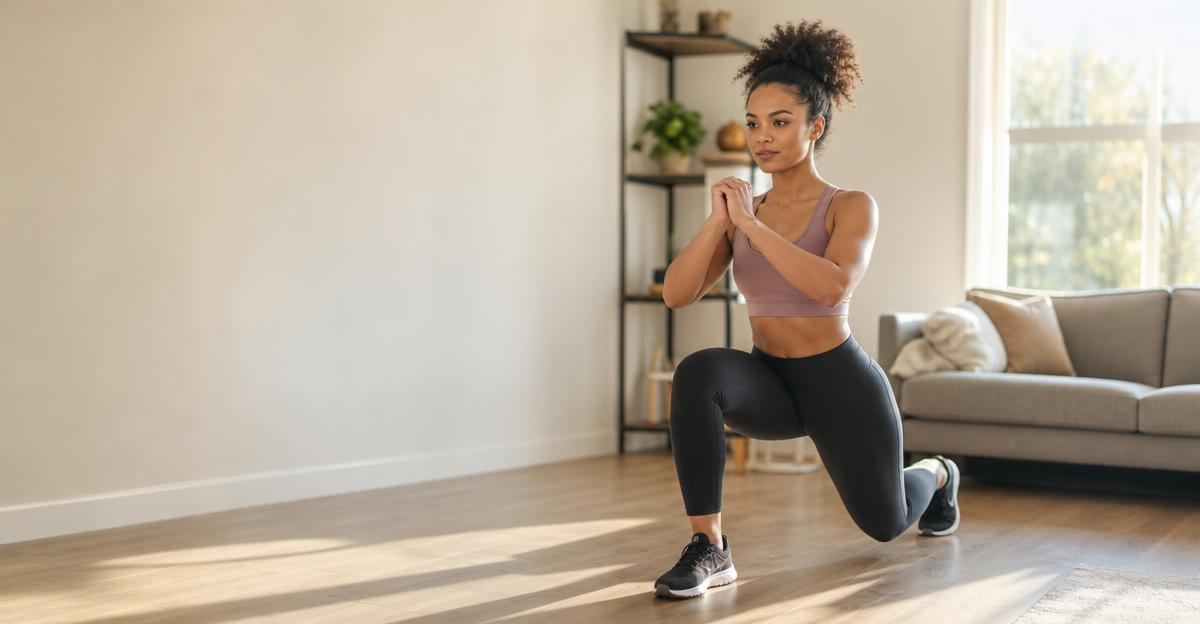
Starting a consistent exercise routine does not require an expensive gym membership, adjustable dumbbells, or a dedicated garage space. Bodyweight movements—such as squats, lunges, push-ups, and planks—provide plenty of stimulus to build functional strength, support joint health, and improve cardiovascular fitness.
The challenge is rarely finding space in your living room; it is knowing what movements to do, how to progress them, and how to stay accountable over months rather than days. Fortunately, several free home workout apps provide structured routines designed entirely around zero equipment. Here is what to look for, how to get the most out of bodyweight training, and how to fit these sessions into your overall health routine.
What Makes an Effective Zero-Equipment Workout App?
When you train without weights, progressive overload works a bit differently. Instead of adding five pounds to a barbell, you progress by increasing repetitions, shortening rest periods, slowing down movement tempo, or choosing more challenging variations (like elevating your feet during a push-up).
A good zero-equipment workout app should support these principles by offering:
- Clear form demonstrations: Video or audio cues that prevent common movement errors and protect your joints.
- Customizable intervals and rest timers: Flexibility to adjust work-to-rest ratios depending on your current conditioning.
- Progressive difficulty: Routines that scale from beginner-friendly movement patterns to advanced bodyweight skills.
- No hidden paywalls for basic features: Transparent access to core libraries of bodyweight routines without sudden subscription prompts.
If you are managing an injury, returning to movement after a long break, or navigating chronic conditions, remember that this is general wellness information. Speak with a physical therapist or clinician before dramatically changing your exercise intensity.
Top Free Home Workout Apps for No-Equipment Training
Several mobile platforms deliver high-quality, completely equipment-free programming without requiring an upfront financial commitment.
1. Nike Training Club (NTC)
Nike made its entire library of workouts free, making it one of the most comprehensive fitness apps available. It features hundreds of bodyweight-only workouts ranging from five-minute mobility flows to 45-minute high-intensity endurance sessions. You can filter strictly by "No Equipment" and choose between trainer-led video classes or self-paced interval workouts.
2. Caliverse
For those interested in calisthenics and pure bodyweight strength, Caliverse offers a community-driven, free platform. It provides structured plans that guide you through functional progressions—helping you move from basic push-ups and bodyweight squats to more demanding movements like pistol squats and handstands.
3. 7 Minute Workout (Simple Design / J&G)
Based on classic high-intensity circuit training research, standard 7-minute workout apps use 12 bodyweight exercises performed for 30 seconds with 10 seconds of rest. These apps are ideal for busy mornings when you only have a brief window to elevate your heart rate and activate major muscle groups.
4. FitOn
FitOn offers a large catalog of free, video-based classes across various modalities, including bodyweight strength, HIIT, yoga, Pilates, and barre. While it promotes a premium tier for offline downloads and meal plans, its core workout library remains accessible for free.
How to Build a Balanced Bodyweight Routine at Home
To avoid overuse injuries and ensure balanced muscular development, structure your weekly bodyweight training around fundamental movement patterns:
- Squat pattern: Air squats, tempo squats, or jump squats to work the quadriceps and glutes.
- Hinge pattern: Single-leg Romanian deadlifts or glute bridges to strengthen the hamstrings and posterior chain.
- Upper body push: Incline push-ups against a wall, standard floor push-ups, or pike push-ups for the chest, shoulders, and triceps.
- Upper body pull / postural holds: Prone back extensions, "Y-T-W" floor raises, or doorway rows to support upper back posture.
- Core stability: Front planks, side planks, dead bugs, and bird-dogs to build midsection control.
Aiming for consistent movement throughout the week is far more valuable than doing one exhausting session and resting for six days. Following the physical activity guidelines for adults—which recommend at least 150 minutes of moderate aerobic activity and two days of muscle-strengthening activity each week—provides a solid baseline for long-term health and metabolic function.
Integrating Home Workouts into Your Wider Health Picture
A workout app helps you execute the movement, but real progress happens when you connect training to your broader lifestyle. How you fuel your body, manage daily steps, and recover overnight dictates how energetic you feel during each session.
For instance, your daily movement outside of formal workouts matters just as much as your 20-minute bodyweight circuit. Pairing home training sessions with walking for active recovery helps clear muscular soreness, support joint mobility, and increase daily energy expenditure without adding unnecessary fatigue.
Similarly, maintaining functional strength supports everyday independence and physical resilience throughout every decade of life. When setting up your living environment for sustainable wellness, tailoring routines to what your home need requires ensures that exercise remains safe, accessible, and practical.
Making Home Training a Lasting Habit
The best home workout app is the one you actually open three to four times a week. Remove friction by setting out your workout clothes the night before, picking a specific five-minute window in your morning or evening, and starting with modest session lengths. As your movement consistency builds, you can gradually increase intensity, try new movement variations, and watch your strength improve—all without spending a dime on equipment.
To see how your daily workouts, daily nutrition, and body weight interact over time, try Stride to log your meals, workouts, and weight in one simple place.
Put this into practice with Stride
Log meals, training, weight and sleep in seconds, then get guidance that fits your own numbers.
Try Stride free